A conversation with Tobias Butler, creator of Tuneshine
Tobias Butler is a software engineer turned hardware entrepreneur who built Tuneshine, a low-resolution LED display that shows the album art of the song you’re streaming. I talked to Tobias about his journey from software to physical product, and why “indulgent toy” is not an insult.
Tuneshine is available at tuneshine.rocks. Tobias is on Instagram as @tuneshine.rocks
Origin Story
You grew up more familiar with software. What was your early tinkering like?
My dad ran an architecture firm and had an architecture-specific CAD program on his laptop, not mechanical engineering, just building design. But I spent a lot of time making fantasy buildings on it, and learning Photoshop early on. That developed pretty naturally into HTML. CSS wasn’t really a thing yet when I first started, but pretty quickly I hit JavaScript, and that was my introduction to programming. I was maybe 12 or 13.
I didn’t pursue it obsessively through high school, but in college I started taking CS classes and thought: I’ve got a decent enough grasp of both web design and programming, I’m just going to say yes to everything for a few years and see what happens. I worked on my college newspaper’s website, helped a friend’s mom get a nonprofit off the ground, built my own stuff. Someone sent an email to the Wesleyan CS list about a startup in San Francisco. That was my first job. That led to the next startup. That led to Change.org, where I had real responsibilities but had already developed the muscle of: build a thing, throw it away, build another thing, throw it away, until each iteration got easier than the last.
I was actually a music major, not CS. I never finished the computer science degree. But somehow the combination gave me enough to pass for a software engineer.
Music and technology seem to go together more often than people expect.
Absolutely. You see it most clearly in the music world, people building their own synthesizers at home, making effects pedals. There’s a healthy community of people who just decide: I have this dream of a physical object, and I’m going to get it into the world. Musicians don’t seem to have the same hang-ups about that that people in the general tech industry do. I think that’s extremely cool.
The Hardware Leap
What was the first physical project that got you into hardware?
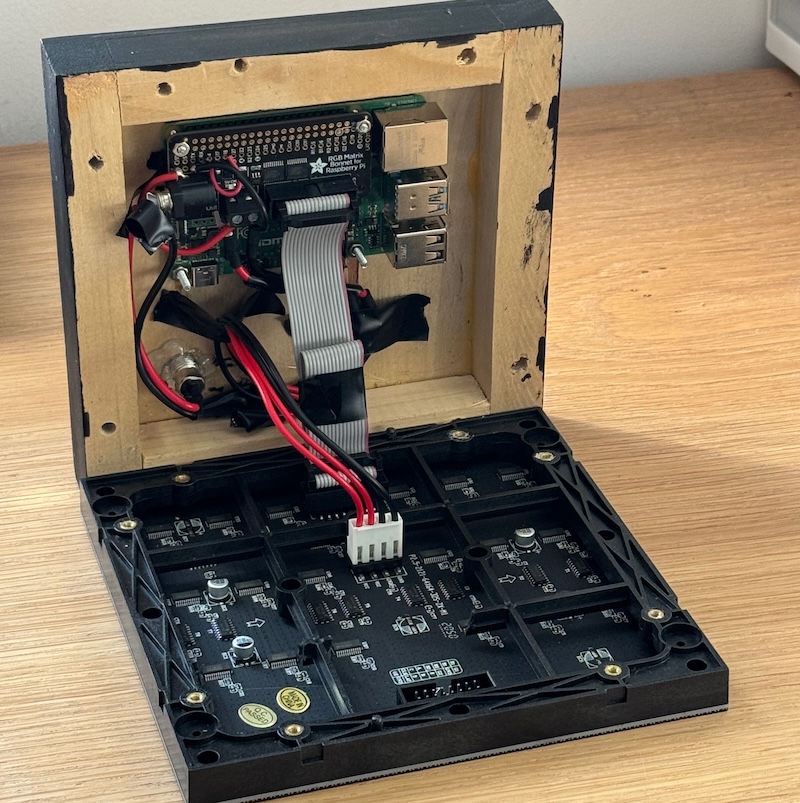
The very first was a BART train timer. I was living in El Cerrito, a 7-minute bike ride from the BART station, and I never left at the same time every morning. I kept checking the schedule to time things right. I wanted a little light that would just tell me: go now, or wait. I tried to connect an ESP8266 to my Arduino, couldn’t figure that out, and ended up using a board from a company called Particle, a Photon board, Wi-Fi enabled, with their own web-based IDE. The result was just a battery sandwiched between two breadboards with a seven-segment display and a couple LEDs. But it worked. I was proud of it.
That was a one-off. The real project came during the pandemic. I was buying parts on Adafruit just to see what was out there, and I picked up an e-ink screen and a square LED panel. The e-ink screen led to the Plant Tamagotchi, I took actual sprites from a Tamagotchi and as your plant dried out, the character got gradually sadder. I was trying to get into the rhythm of keeping houseplants alive. Let’s just say there were some sad endings early on.
And then the LED panel?
With the square LED panel, I was thinking about messaging, a digital chalkboard for my housemates during the pandemic. But I couldn’t figure out the interface design, and I kept coming back to the same problem: the square display is bad for text. So I asked myself, what is it good for? And the answer was obvious: album art is almost always square.
“I had no interest in selling a bad iPad”
As soon as I had that running on my desk, I just thought, I don’t know what it is about this, but it’s clearly a good idea. I started sharing it on Instagram, and friends were messaging me: What is this? Can I buy one? Having done a startup accelerator once, I knew that if you show a prototype and people are knocking on your door saying “I will send you money right now”, that’s about as strong a signal as you can get.
What made this feel like the right moment to actually go for it?
A few things converged. I was also far enough into my career that I felt I could slip back into software work if I needed to. And I didn’t have kids yet, so the financial pressure was manageable.
But honestly, what clinched it was the product itself. I know music. I will never get tired of talking about music every day. I did not know plants that well. The plant thing was fun, but me running a plant business didn’t make a lot of sense. With Tuneshine, I could lean heavily on my software expertise and make the most complex part of the product, the onboarding and the app, something I was genuinely confident in. The firmware itself just had to display images. That was new territory, but it wasn’t going to stress the areas where I had no experience.
Building the Thing
How did you go about programming the firmware? Did you try to keep that part simple?
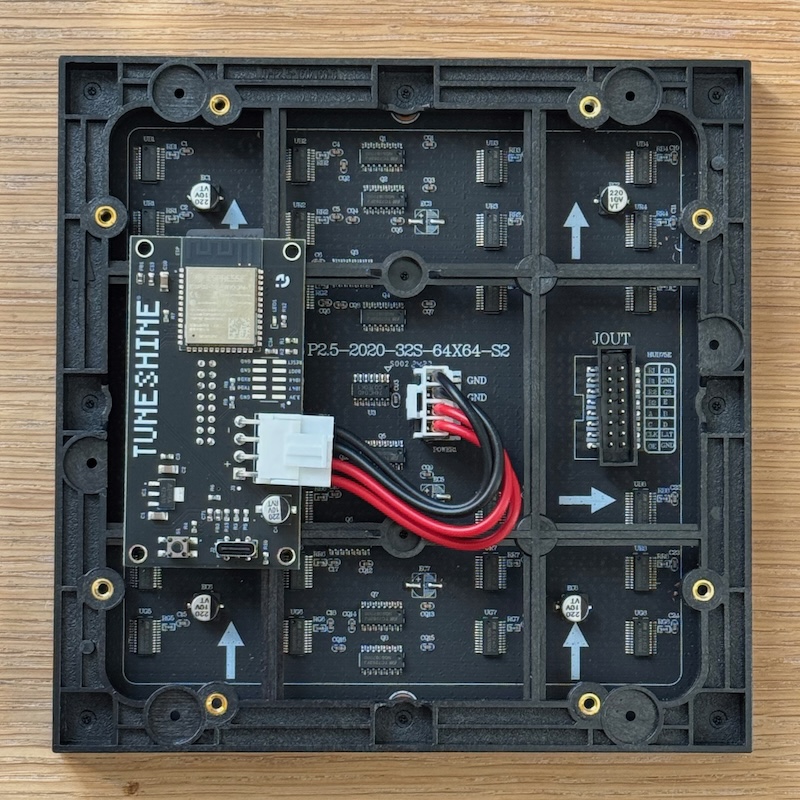
That was intentional from the start. The firmware has no idea it has anything to do with music, or streaming services, or Spotify. It’s essentially just an image display that you configure via Bluetooth, which then connects to your Wi-Fi and pulls images from a server URL. There is no mention of music anywhere in the firmware itself.
That turned out to be really useful early on. Because all the “what is this displaying” logic lives in the server, I could introduce new features, like a scheduling feature to turn the display off at night, without pushing a firmware update. People didn’t have to do anything. It just worked.
A lot happens on the server because it has to. If you’re building a networked product, you are making a choice between ease of use and longevity. For services like Spotify and Apple Music, routing through the cloud isn’t optional anyway, you have to hide your API tokens somewhere or your product gets banned from the platform immediately. But I hear the concern, and I am currently working toward local control for services that support it. It adds complexity, state living in more places, but it’s the right direction for people who care about that.
What’s your QA process for firmware updates?
I try to maintain strong backwards compatibility, and I make firmware updates optional rather than automatic. The design philosophy is that I want people to enjoy the Tuneshine passively, like a nice piece of furniture. If you’re thinking about what firmware version you’re on, I’ve already failed. So unless there’s a security issue, updates are there if you want them, not mandatory.
That said, I did have one incident. I updated the ESP-IDF framework and the Bluetooth library, and there was a change in how the device advertised itself that meant it could no longer be detected by the app during setup. The tricky part was that iOS had a layer of Bluetooth discovery caching that masked the bug from my own testing. It only showed up in the wild.
The pattern was always the same: someone received a Tuneshine as a gift. Their friend had set it up, tested it, then packed it up, and in the process, applied the firmware update. When the recipient tried to set it up for the first time, it didn’t work. About 15 people needed exchanges.
How did you handle that?
I was out of town, right after Christmas. But the lesson I’d give to anyone doing their first product: if you can put on your customer service hat and just be the most apologetic, genuinely helpful person for the week it takes to resolve things, people often forget they were even that upset. The bar for customer service is so low that when people realize they can actually reach the person who made the thing, and that person is trying to help them, it turns into a positive. Several of those people ended up becoming some of my most enthusiastic customers.
Manufacturing
You’ve done some interesting things on the supply chain side.
Note Tobias was on the popular VergeCast podcast talking about tariffs in 2025
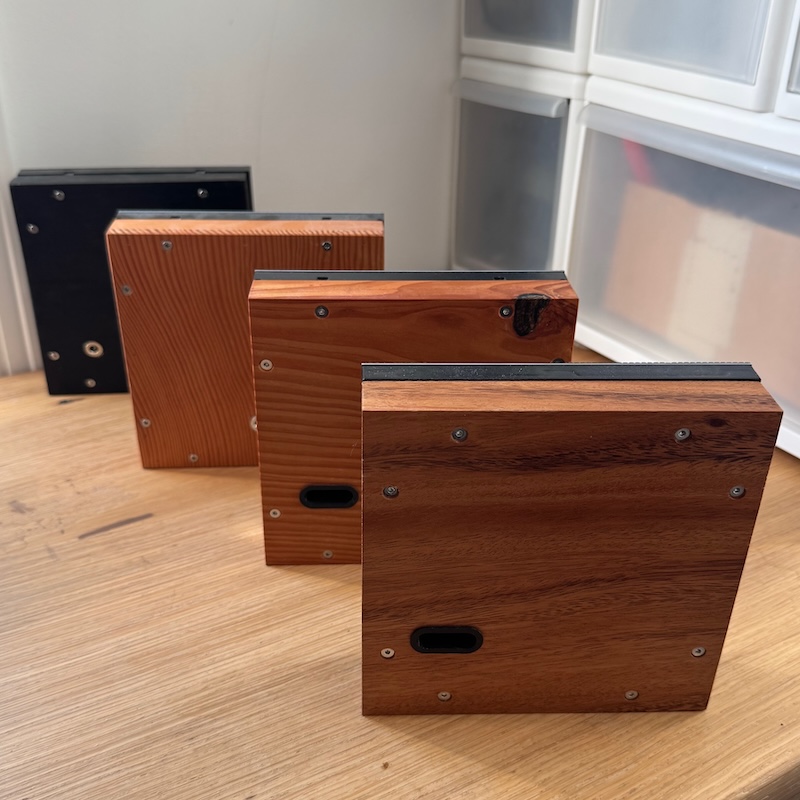
I always assembled Tuneshine in the US, but I have a lot of respect for the suppliers I worked with in China, incredibly responsive, happy to solve problems, ready to absorb small engineering work to win a new client. The Alibaba ecosystem is remarkable, especially for a first-time hardware person. The problem isn’t access; it’s the sheer number of choices. There are probably 100,000 USB-C power bricks on Alibaba. Finding a good one takes real time.
I’ve been trying to bring more of the manufacturing to the US. The PCBs now come from a company called Evertech in Wisconsin, which was a surprise, someone cold-emailed me through a family connection, and I was skeptical, but the timing was good. With the tariffs, paying duties on components rather than a finished board from China actually made the numbers work. And I can pop over to Chicago to check on assembly, which I like.
Not every attempt to onshore has worked. I wanted to make anodized aluminum special-edition Tuneshines. Found someone in the US to cut the aluminum, but they didn’t do anodizing, and the anodizer they needed to coordinate with never got back to them. Meanwhile the China manufacturer was already ready to ship. It’s not a simple story of one being better than the other. It depends on what you need and who happens to pick up the phone.
The Philosophy
The low-resolution screen is a unique look in a high res world. How do you think about that?
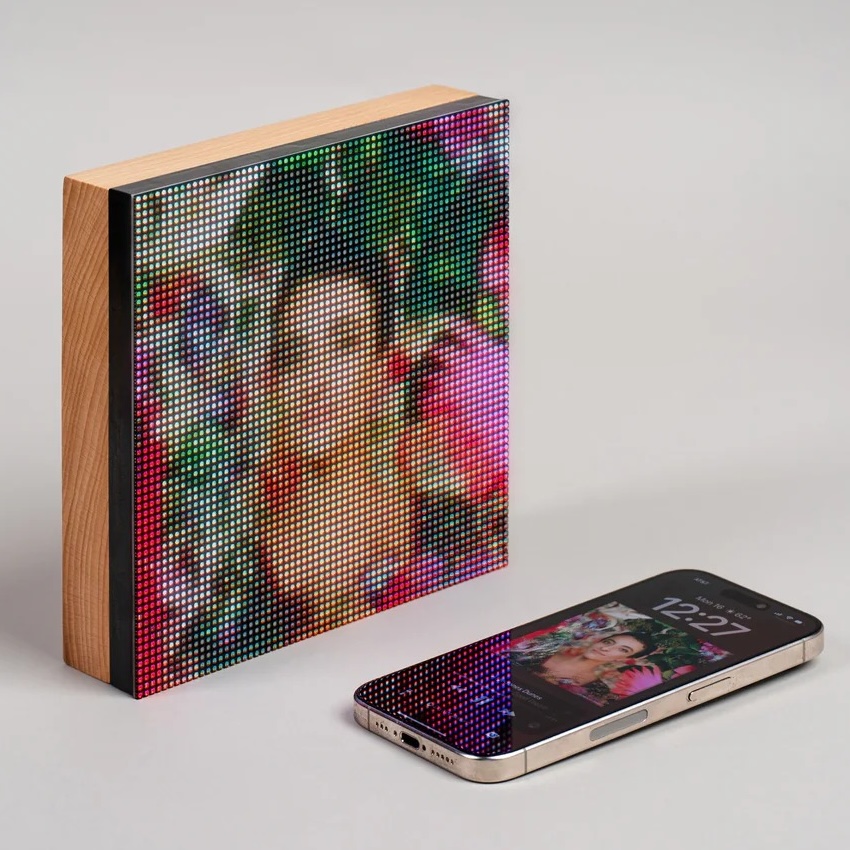
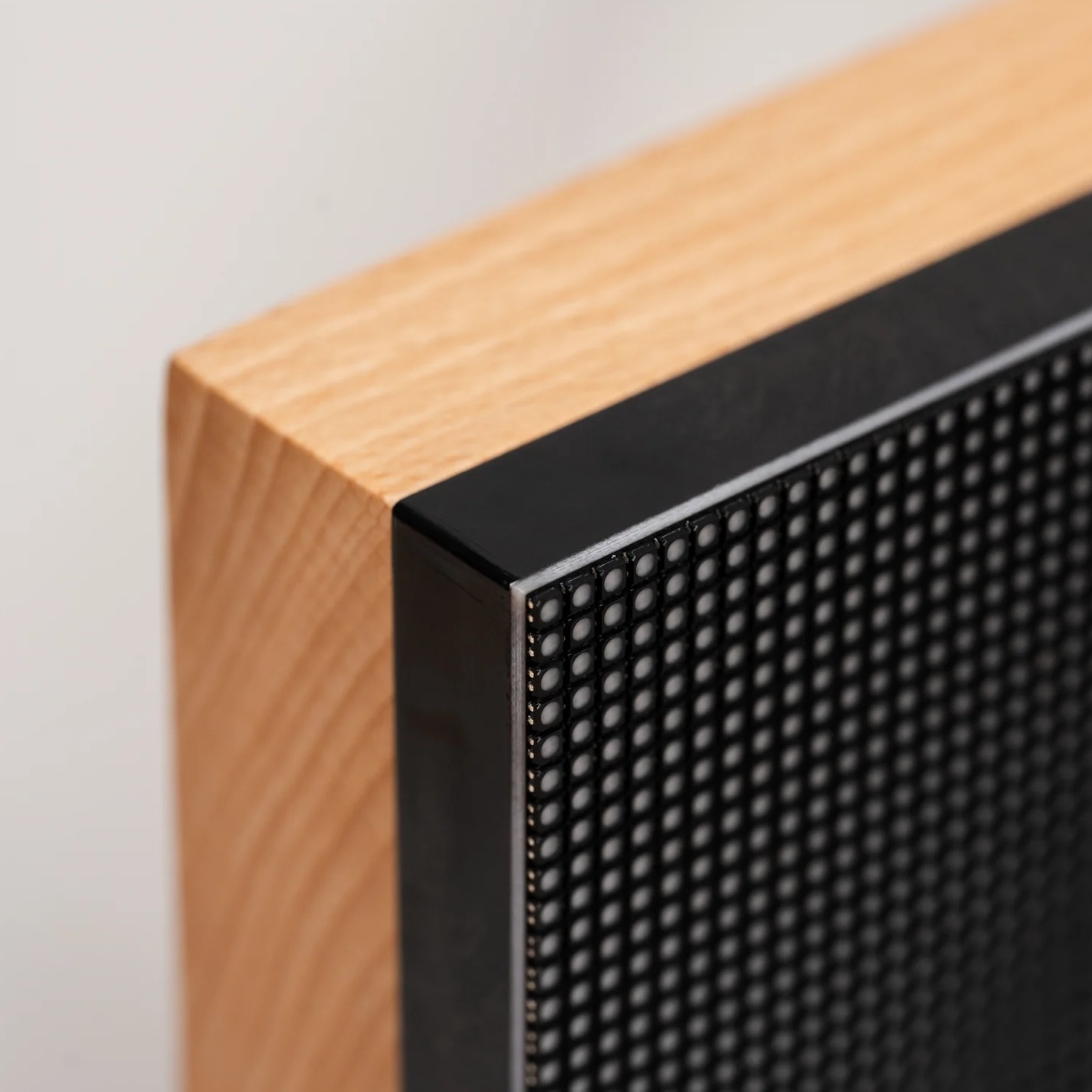
A few things. First: I have no interest in competing with an iPad. Not just because that would be bad business, but because I genuinely have no desire to try to win that race. And there are things about the low-res screen that are actually compelling on their own terms, I think it tricks your brain into not thinking of it as a screen. A big part of that is the lack of bezels. No one has come out with a high-resolution screen without bezels. And so the low-res-plus-no-bezels combination is, I think, core to what makes it feel like an object rather than a worse iPad.
You get asked about adding a clock. What do you say?
Usually “not yet.” I’m building a music product, and I know music. I’ve tried to be thoughtful about every detail of the music experience, small things you might not consciously notice, but that make it feel like someone cared. I don’t know how to design a good clock. And the ESP32 doesn’t actually know what time it is, I’d have to figure out if the system timer is reliable enough, build some rendering engine for clock faces. That’s not impossible. But I wouldn’t want to add it if I couldn’t be as thoughtful about it as I was about the music side. So it’s a “not yet” rather than a “no.”
Someone said “they didn’t get the product, it was an indulgent toy”
I told them they actually did get it. It is an indulgent toy. There’s not much more to understand. And I think the relentless focus on usefulness is part of why so much tech looks the same. When usefulness and specs become the only criteria, you end up with a very homogeneous landscape. There might be a lot of products hiding in the space between “useful” and “useless” that people could genuinely love. That’s the space I’m trying to be in.
There’s something interesting about what it does for the streaming era.
Vinyl collectors have something streaming listeners don’t: a physical record on a shelf that says something about who you are. When someone comes to your house, they learn something about you from what’s on your shelves. You made a choice, spent money, dedicated space to it. Spotify Wrapped goes viral every December partly because people are hungry for that same thing, a way to say, this is the music I listened to this year, this is part of me.
Tuneshine doesn’t solve the whole problem, but it gives back a piece of that. If the album art is visible in your room while you’re reading, or when someone comes over, it brings the music into your visual space in a way that lets you express something about yourself. I think that’s underrated in the streaming era.
Other Makers Worth Watching
Who else is doing work you find interesting?
Live Grid is an LED screen-based product that displays your home’s environmental data as an animated fish tank. Your CO2 levels, temperature, humidity, all expressed visually as the health of this little ecosystem. Is it as “useful” as a number readout? Of course not. But will your friends ask fun questions about it? Yes. That’s the right question to be asking.
Petru Designs makes an audio visualizer and equalizer with a wood aesthetic that actually complements Tuneshine, people often set them up together. A father-son team, I think based in Lithuania. A cottage industry tech company that just makes something simple and makes it well.
Nanu Electrics, out of San Francisco, makes an analog-feeling alarm clock with a physical chime inside, sounds like a vibraphone when it wakes you up. My wife uses it. What’s interesting about them is that they came from industrial design backgrounds, and their entire process reflects that: precise CAD, proper Kickstarter, the full production path. My instinct was to build fast prototypes and cobble things together until it worked. Their instinct was to get the industrial design right first. Both approaches can work, it just depends on where your strengths are.
One Last Question
You’ve looked at more Tuneshine album art than anyone alive. Which cover looks the best?
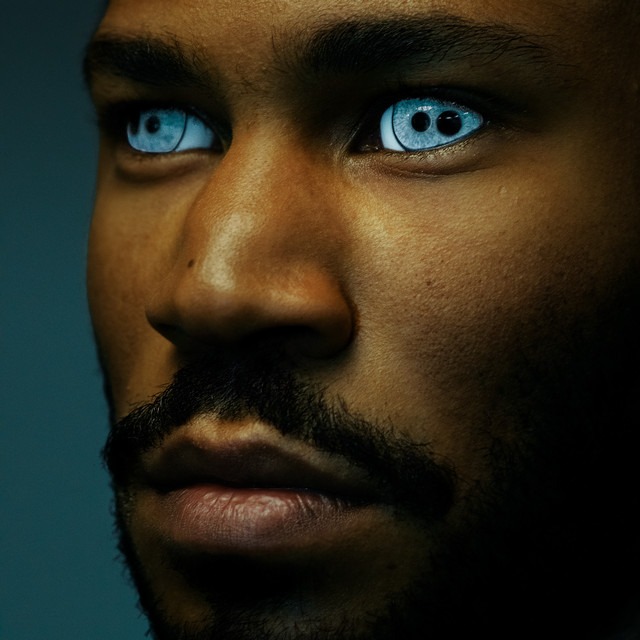
The one that gave me the earliest signal that this idea had real potential was Bubba by Kaytranada. A big face, almost filling the whole display. There’s a certain gravity that actually feels more powerful at low resolution than it would at higher resolution.
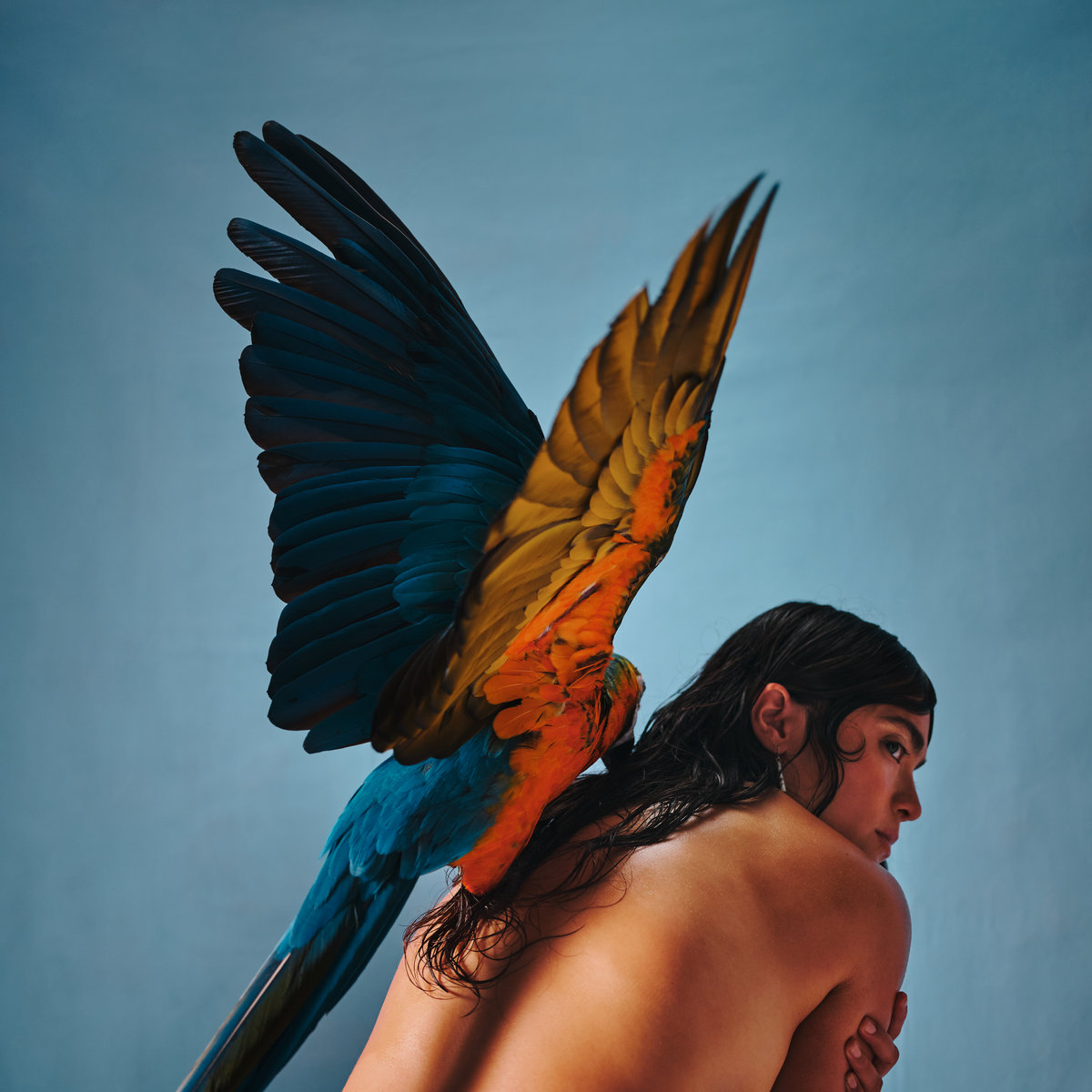
And for color, Malegría by Reyna Tropical, which I’ve used in my marketing with permission. A limited palette, mostly restrained, and then this little pop of orange on the parrot’s wing. Saturated colors like that just sing on an LED display. Something to do with additive versus subtractive color, you’re shining individual LEDs rather than blocking light, and I think magenta in particular has some physics reasons to look especially good in that context. That composition just stopped me every time I looked at it.