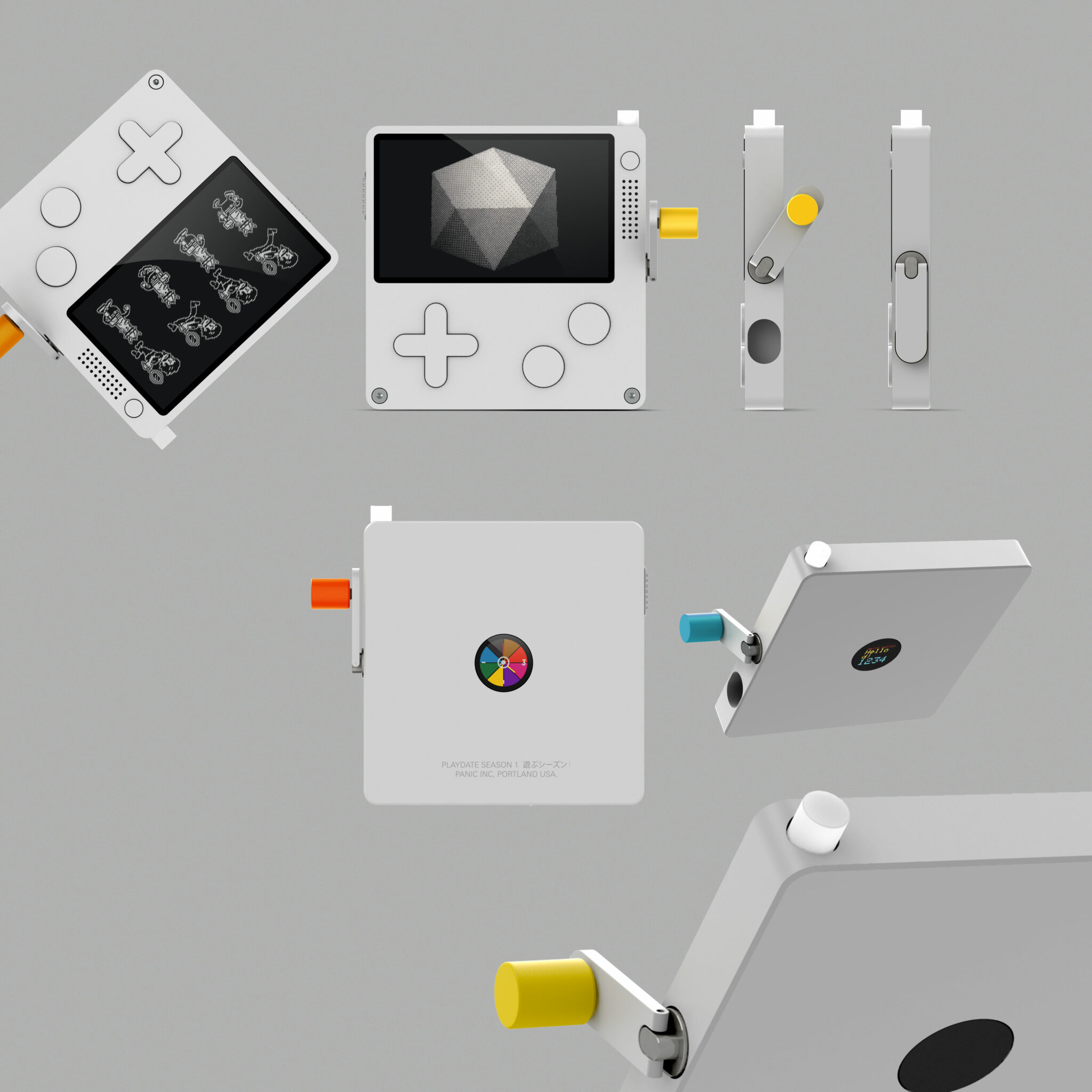
A Playdate with Greg Maletic and Neven Mrgan from Panic Software
The creation of the Playdate game device with Greg Maletic (Playdate Lead) and Neven Mrgan (Panic Creative Lead)
The Playdate game system is available at https://play.date. Additional context and quotes drawn from the unusually detailed blog post The Story of Playdate
Was there an initial inspiration that tipped this into reality? Perhaps an old school project like MAME, or classic handheld devices?
Greg: We’re a company stuffed with people that have been playing console games since the 70s and 80s. (Well, to be clear: I’m the old one that played console games in the 70s; nobody else at Panic had been born yet.) So we’ve always had an attachment to dedicated game machines.
The thought of making our own console — when the possibility presented itself — seemed fantastic; beyond belief. It was incredibly enticing.
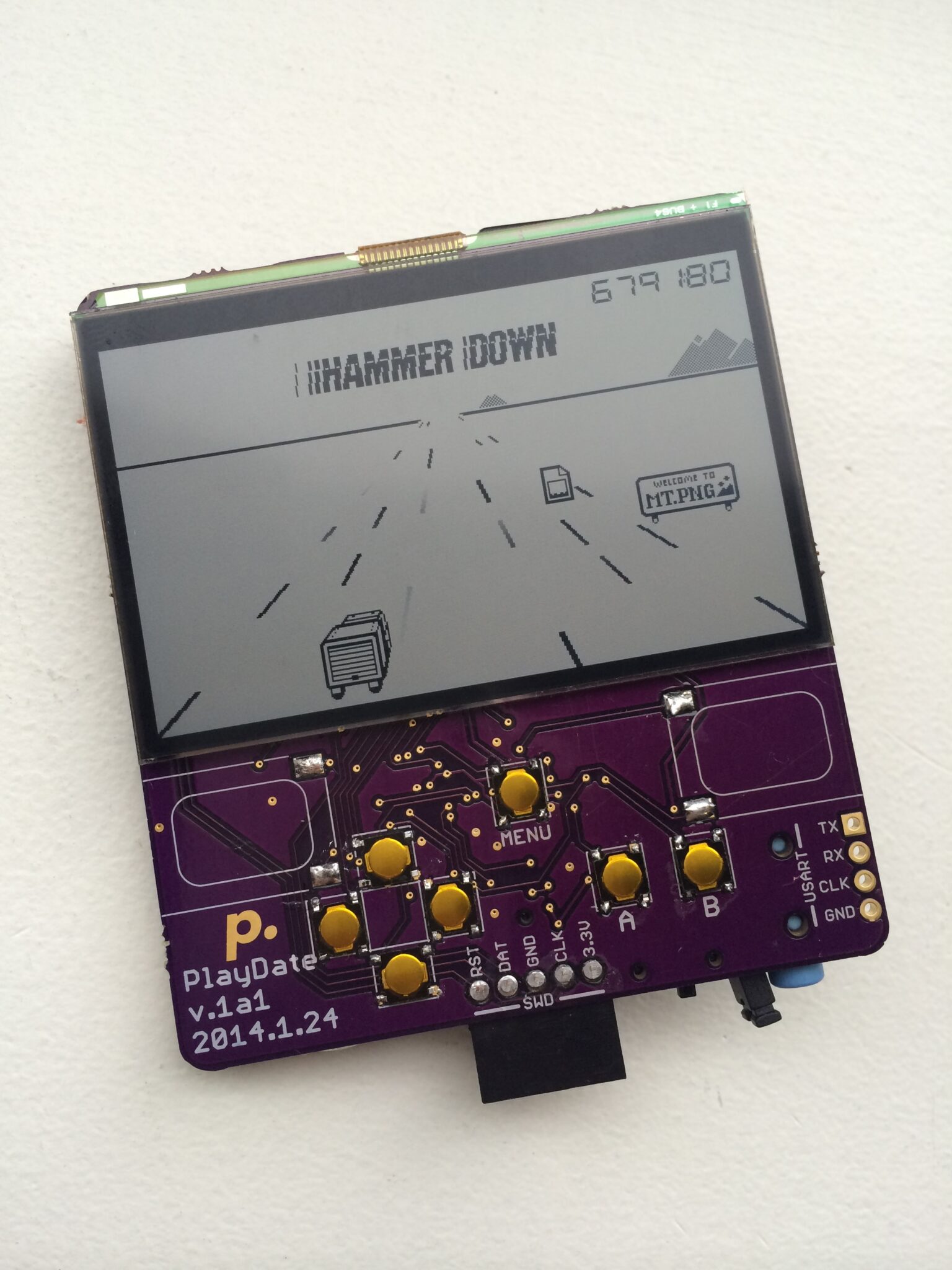
Panic’s earliest 15th anniversary top 150 customer keepsake concept was literally a clock — Cabel Sasser floated ideas including one with a porcelain case that could chime. The Sharp Memory LCD display (reflective like e-ink, but faster) changed everything. The project iterated from clock → Game & Watch clone → real game console over several years before settling on a name.
The first physical prototype — just a circuit board with a screen — was shown to Teenage Engineering’s Jesper Kouthoofd at Moogfest in Asheville, North Carolina. Panic named the project after the city.
Any theory for makers out there on what makes a constraint fun versus a burden?
Neven: People will find ways to be creative and unexpectedly delightful within almost any set of limitations, but the most fertile ones tend to focus the author’s thinking on building perceived complexity out of simplicity.
For example, our black-and-white screen is as restricted as graphics get, and the most obvious approach to go with is simple line art. But anything is possible if you start hinting at richer visuals with different patterns: dithering, hatching, dancing grain. These will exploit human perception of small textures and moving dots to create effects of shade and depth.
Conversely, some constraints aren’t solvable just by rethinking the style of your game. I like to think of platform rules as such a constraint: worrying about surprise store rejections with each new feature or update is an annoying cap on one’s creativity. Could we ship a game that does this cool thing? Maybe, but it’s not worth trying if we’ll just get rejected for it.
Another such limitation that’s a little more technical in nature is frequent app switching and interruptive notifications. Phone games suffer from this: when a game becomes too challenging, the player is tempted to just move on to something else with a quick gesture. And while they’re playing, endless notification banners may kick them out of the experience. Not having these features — as useful as they are for a general-purpose device — means the game designer can avoid unsavory ideas like annoyingly addicting game loops, poking the player to come back, delaying the moments of happiness the player is presumably launching the game for in the first place.
There are a lot of stories of “hardware is hard”. Could you share any “learning experiences” or “immediate opportunities for a solution needed”?
Neven: I believe our initial dream was that we manufacture, say, a few thousand of these, and then surprise-announce them to the world when they were 100% flashed, boxed, and ready to go. But we learned that iterative production is a more responsible way to do things: make a small batch, then analyze what could be improved about the product and the process itself.
And that was another big lesson: you’re designing the manufacturing line, the logistics chain, and the support flow as much as you’re designing buttons and views. It’s something end-users don’t see—and they don’t need to—but it’s very important to get right.
Greg: The biggest surprise to me was that manufacturing doesn’t get any easier after you ship the first unit. I counted on a lot of pain before that moment, then smooth sailing afterward. But it’s a constant struggle to make sure you have steady supply of parts; designing around parts going end-of-life; quality issues… it truly never ends.
What was the prototyping process like?
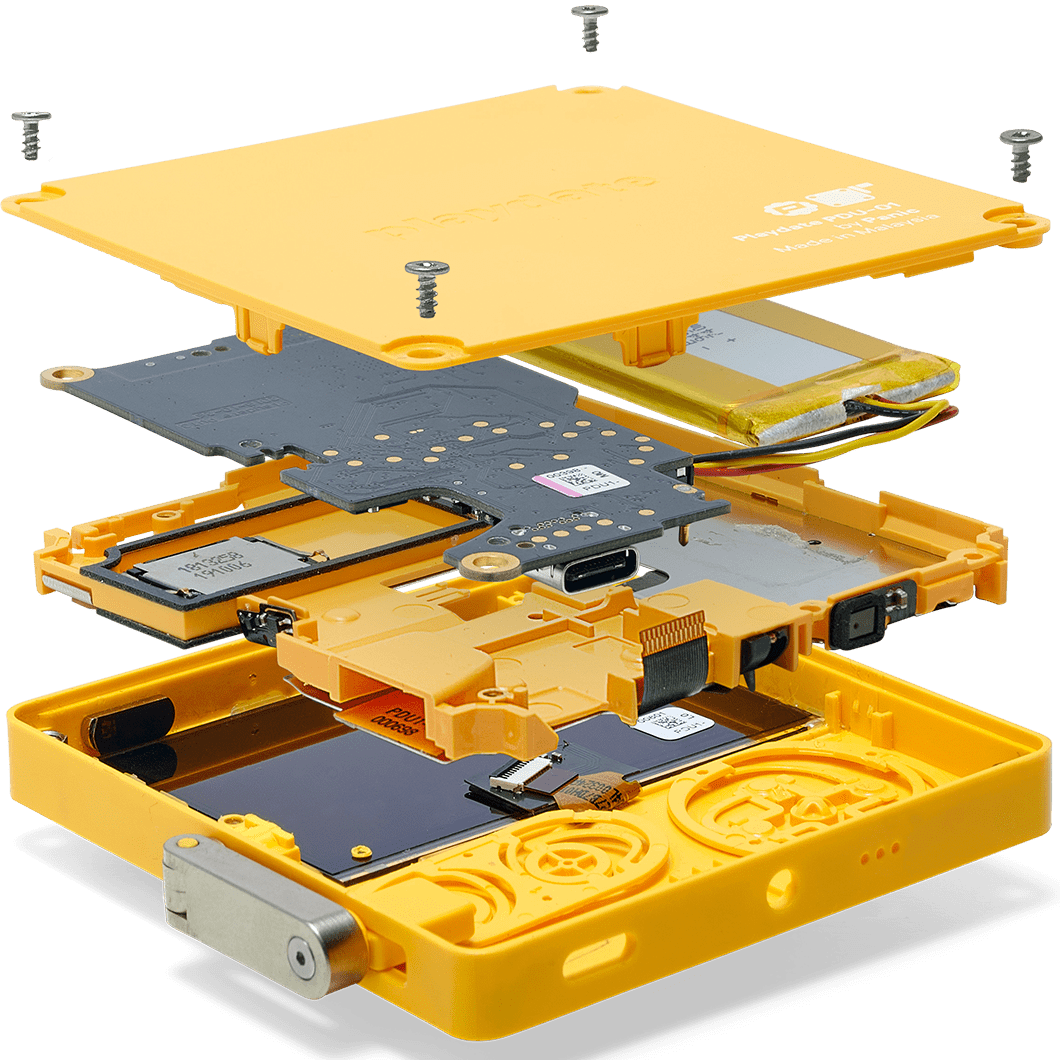
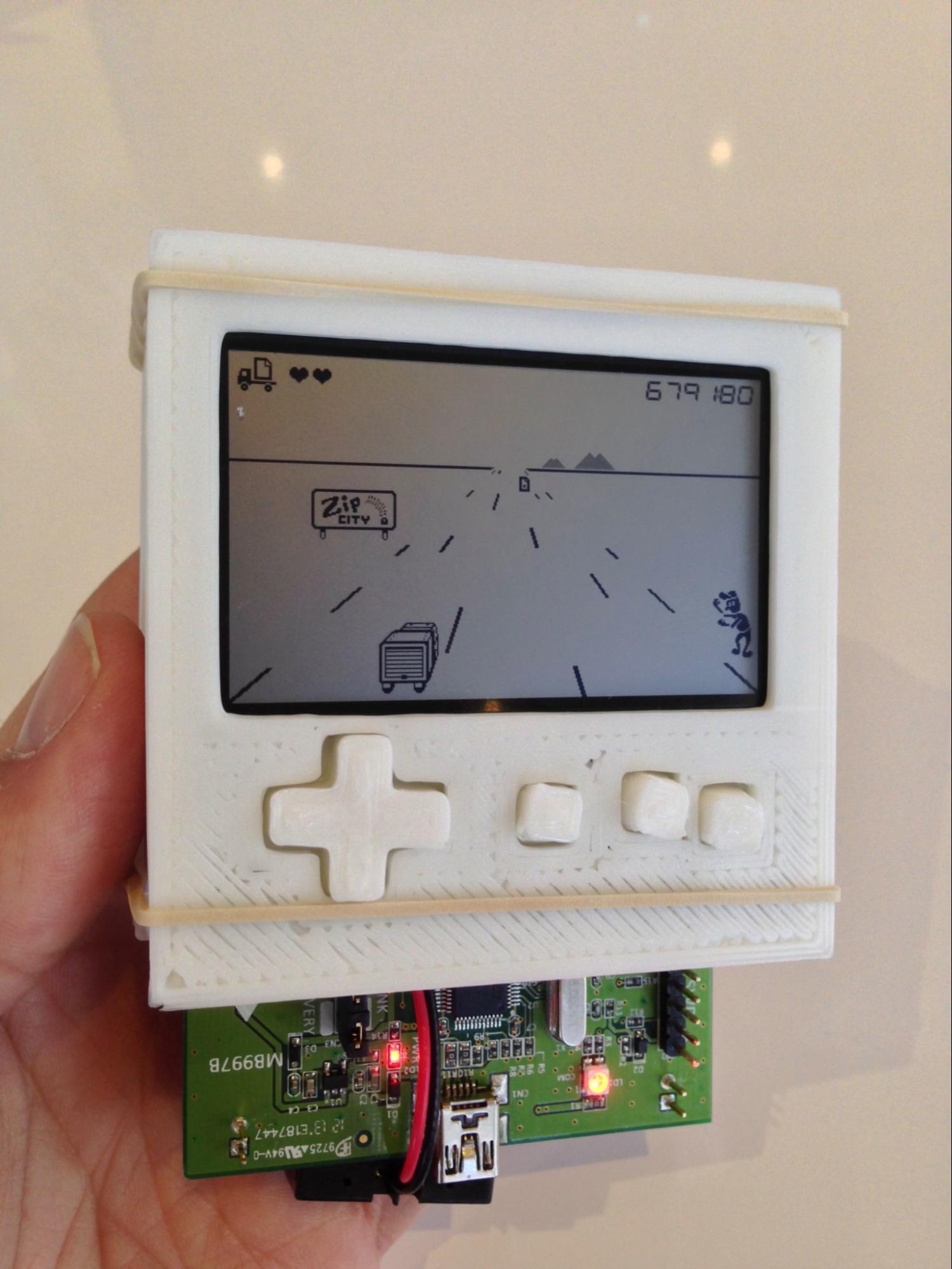
Greg: Even though it was 2014, we were 3-D printing enclosures way back then. I specifically recall one experiment where we tried different case thicknesses: 8mm, 10mm, 12mm. Teenage Engineering (more on them later) really wanted 8mm because they liked the look, so that was what we went with. Cramming that much into that thin of an enclosure was a trick — especially getting a button design that can press satisfyingly within that tiny space. (We went through a lot of button designs to get the right feel.)
All that said, there isn’t much we had to change about the basic concept for the hardware form factor. The more we tried it, the more we liked it.
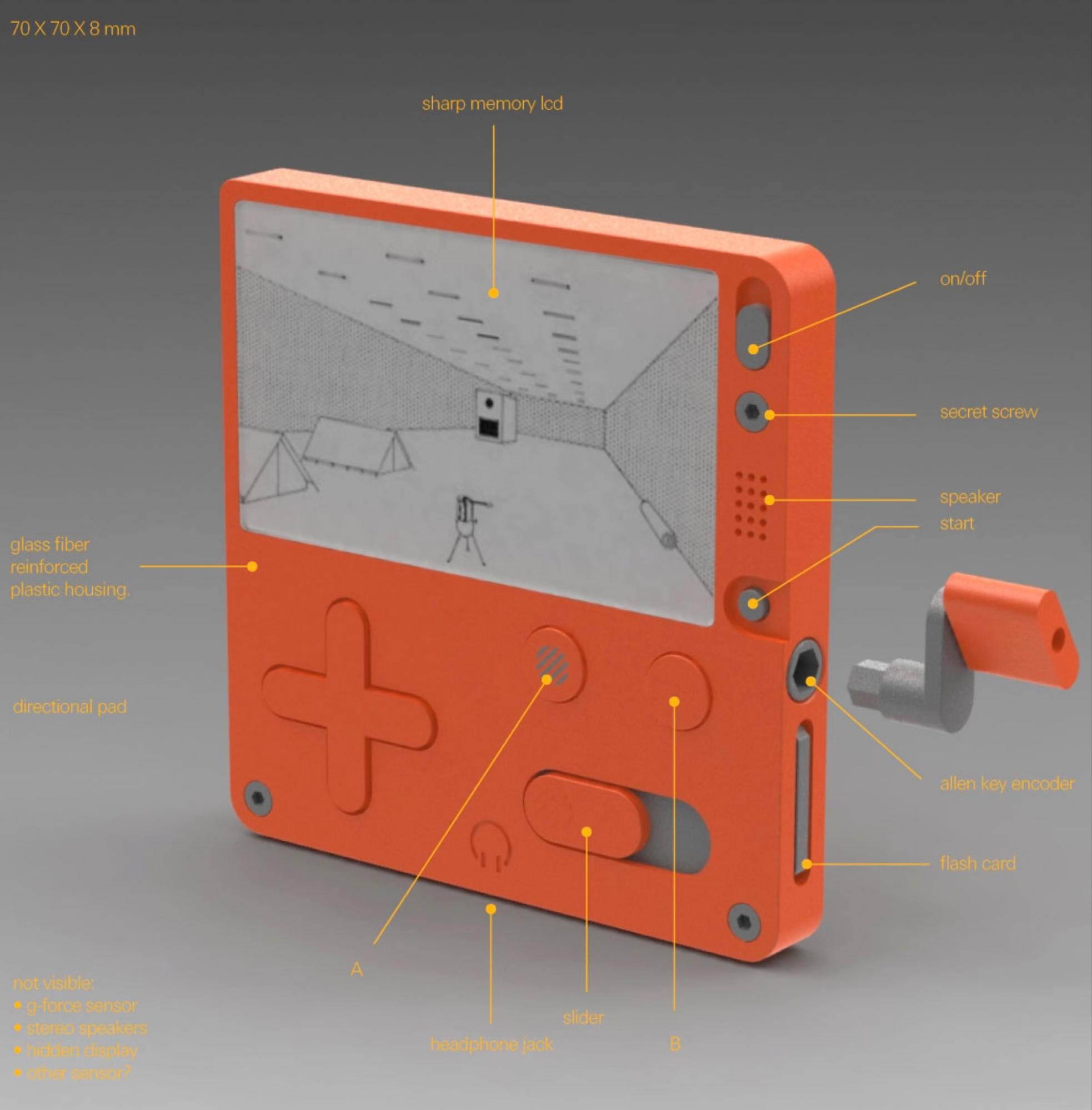
Was there a moment when you were convinced to go with the crank arm? I suppose you guys had a whole bunch of other different ideas at the beginning.
Greg: We had been assuming we’d have just a d-pad and two buttons. The idea for the crank came from the first rendering that Teenage Engineering sent to us.
We’d approached Teenage Engineering very early on to help us: they’re an amazing design firm, and we loved how their products looked and operated. They’d had a crank concept on their OP-1 synthesizer, so I think it was natural for them to want to bring that to a game console. But it had definitely never occurred to us! I think it only took us 20 seconds to decide yes we need that. It was the very best kind of gimmick: memorable, funny even… but it also seemed like it could be a legitimately great way to control a game.
Teenage also suggested other mechanisms, a touch surface on the front of the device being one. (Imagine a trackpad that operates along just one axis instead of two: that’s what it would have been like.) We toyed with the concept for a while, but it both felt like “too much” — how many weird control mechanisms can we support? — and also “not enough” — as in, is a touch surface really special or unique enough, given the cost and complexity of supporting it? We didn’t want Playdate to seem like a grab bag of oddball control mechanisms, so we decided to focus on the crank, and that would be it.
Jesper Kouthoofd of Teenage Engineering:
“Everything we do is to create kind of like an alternative to Touch-screen psychosis. To us, it’s very unsatisfying to use a touch device. I get it, and I think it’s a great interface for creating a lot of different applications without, you know, having hundreds of buttons and knobs and stuff. So it’s very effective for like a smartphone, but for a gaming device…
A gaming device to me is almost the same as a musical instrument. It’s about zero latency, muscle memory, and you need to feel that you are in instant control of everything that happens. And that tactility, however you solve it, if it’s like pressing a button or turning a knob or a crank, it’s very important for the whole experience and the joy of being, you know, like in control and using your hands.”
Is there a feature you’re most proud of saying no to?
Neven: In the 2020s, it seems a standard expectation that a new electronic device with a screen will support touch input. We could have done this, and we chose not to. There are several reasons for it: it’s not ideal for the kinds of games we liked best; it soon becomes the main input the player uses, so the hardware controls might as well not be there; it’s already on phones we have in our pockets; and it just doesn’t feel as satisfying to the human hand which evolved over a long, long time for grabbing, moving, and pressing things. Everyone spends too much time today mashing their fingers against glass—we don’t need to add to that total.
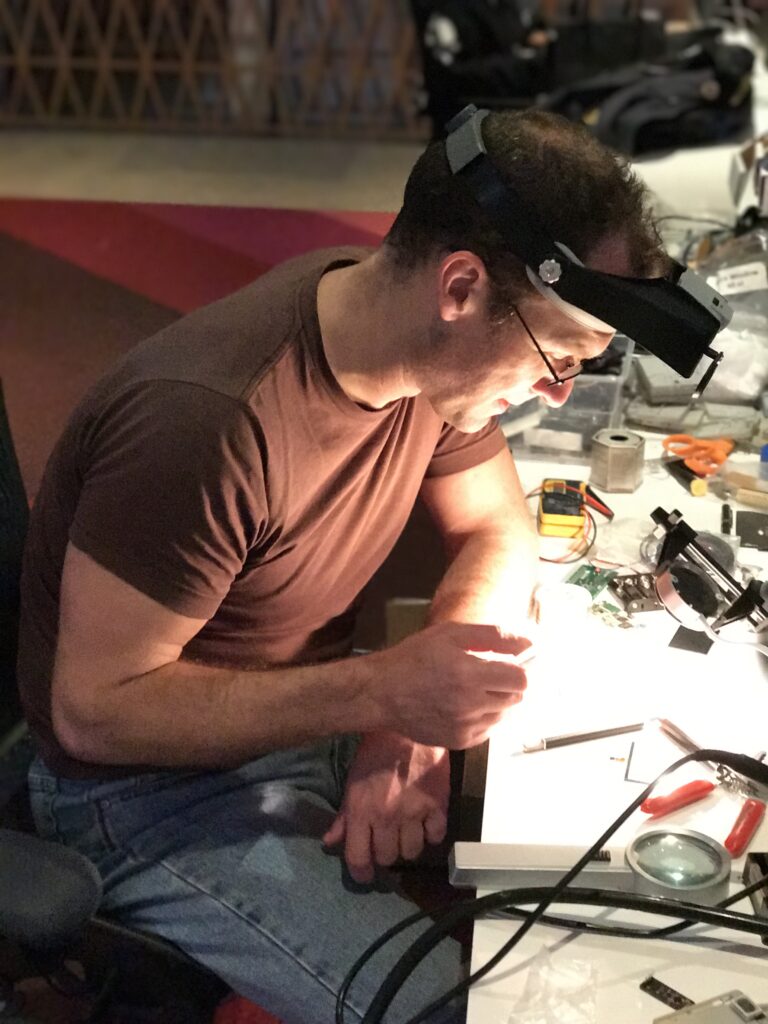
Greg Maletic (on accepting a failure during production) “I’m not going to be upset about this. I’m just going to take these problems as they come … because hardware is tricky.”
How did the platform software, hardware, and game development influence each other? For example did a game add or change an element of hardware or software?
Neven: The hardware was more or less locked by the time we were developing and commissioning games, but the software went through a lot of changes before we shipped Playdate. The SDK itself — the set of tools and functions developers use to build their games — kept evolving as games needed new features. Game developers often like writing their own code for UI layout, collisions, and so on, but we added conveniences to make this easier for everyone. Sometimes that was driven by the desire to improve performance, other times it would save development time.
Our web-based game-dev tool Pulp was imagined as a very simple and quick, click-and-place editor. The first games made showed potential for slightly more functionality. What if you could save your progress? What if you could make your own font? With each new added function, the games would push the envelope of possibility a little more, and a sort of virtuous loop eventually happened, with tool and product driving the development of each other.
Every Playdate is a developer unit. The SDK is free; no special hardware is required to make and sideload a game. The web-based tool Pulp lets non-programmers make Playdate games without writing a single line of code.
If you had the opportunity to add one more thing, what would it be? A button, more memory, AM / FM radio…?
Neven: A crank button. Allow me to explain… Playdate has a crank, which is super fun to turn, whether fast or slow, frenetic or precise. When you have one hand on the crank thumb, your other hand is likely controlling the d-pad, which means neither hand is free to press a basic action button. I’d like to see a button on the crank thumb itself, the small piece you grip the crank by. This would probably be a squeezable membrane button, so you squish the whole thumb piece. That way you could, for example, navigate with the d-pad, turn yourself or power something with the crank, and click the crank button to act on objects you encounter.
Greg: For me, it’s a vibration motor. It could add a lot to the feel of turning the crank.