A Tangible Design Conversation with Ted Ullrich of Tomorrow Lab
Interview conducted August 13, 2026
“Hardware is hard because you’re not just building the thing — you’re building people’s confidence that it’s going to work.”
For my forthcoming book, Designing the Tangible Interface, Tomorrow Lab co-founder Ted (Theodore) Ullrich was kind enough to talk about how a real Hardware Innovation Studio works, why the gap between prototype and mass production is the hardest part of hardware, the studio’s tiered prototyping process, and what he’s learned teaching a tangible-design course at SVA.
 Theodore “Ted” Ullrich, Partner, Interaction Design & Electrical Engineering, Tomorrow Lab. tomorrow-lab.com/about Image: Tomorrow Lab LLC
Check out their cool video series “Potentially Genius”
How do you describe what Tomorrow Lab does?
The elevator pitch is that we’re a hardware innovation studio. After that, it really depends on who I’m speaking with — I try to get a sense of their background first. If someone’s already in technology, I’ll say we focus on hardware, physical technology products. If I’m speaking to a designer, I’ll play up the design side more — the holistic innovation approach. My co-founders and everyone we hire have a balance of technical engineering and design sensitivity.
If someone doesn’t come from either background and they’re looking at me like I have two heads, I just say we’re like an architect — except instead of buildings, we’re an architect for product ideas. Everything from bicycles to toothbrushes. By that point, usually someone says, “Well, I have an idea” — and off they go into their whole thing.
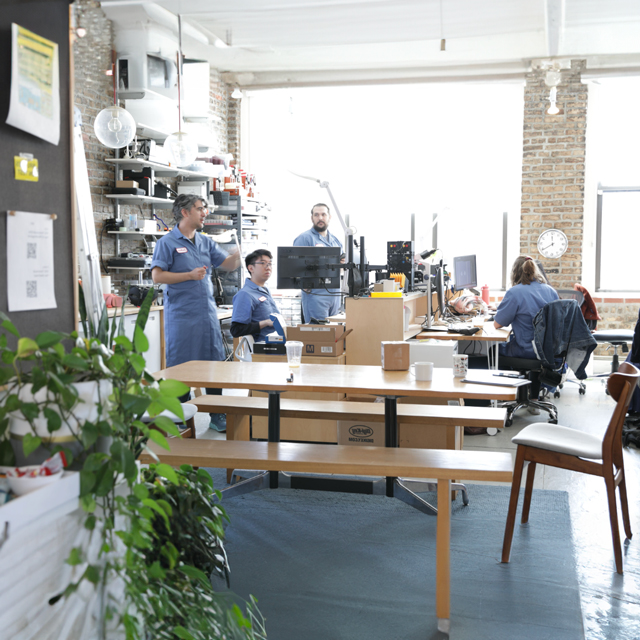 Tomorrow Lab’s team — a mix of industrial designers and mechanical, electrical, and firmware engineers. tomorrow-lab.com/about Image: Tomorrow Lab LLC
Does your approach differ from a classic industrial design consultancy?
We don’t just focus on the form, the aesthetics, or the usability — though those are very important. We back that up with real engineering rigor, the ability to actually develop products, and experience bringing many of them into manufacturing. On top of that, we have familiarity with building new companies, being an entrepreneur.
What that means practically is having sensitivity to what deliverables are helpful at the right moment to keep a startup moving — what prototype fidelity you need, how many units, what you need to show stakeholders to unlock funding for the next step. We’ve done that so many times that we have a lot of knowledge about what to do when, versus a startup doing it for the first time.
 Step 1 — Proof of Concept, from Tomorrow Lab’s Teralytic case study: engineering rigor from day one, translating a client’s ambition into a functional breadboard. tomorrow-lab.com/projects/teralytic Image: Tomorrow Lab LLC
Hardware is famously hard. Has that changed over your career?
The upfront prototyping procedures have gotten a lot easier, thanks to electronic prototyping platforms maturing, more “hello world” examples, more documentation, more open-source starting points. What hasn’t gotten easier is the valley between the prototype and mass production. That’s what we try to deliver on — these “looks like, works like” prototypes that are high fidelity but not yet produced at mass. I’m talking about quantities less than ten.
We used to work with several groups who specialized in that one-through-ten quantity range, but they’ve recently shifted their business models away from it, so we’re refreshing our rolodex there. A lot of what you’re doing at that stage is facing the scale-up process — bringing in materials and processes that are only available at certain minimum order quantities, maybe a thousand units. I mean things like production lines, sonic welding, overmolding, electromechanical assembly, or the production of a component itself.
For example, for the SymplBrush, we developed these custom folding bristle trays. In the early stages we were literally gluing bristles one by one by hand, because doing that in a factory process would have meant investing at least $10,000 or $20,000 in tooling — and the client needed validation that this was the right choice before paying for that.
These aren’t cliffs, they’re walls — you have to figure out what compromises to make, and how to bring production methods that are blocked by quantity or price down to a level you can still operate at, in order to intelligently scale up and unlock funding for the next step. We may know a process we’ve prescribed is going to work at scale, but we’re often dealing with clients who’ve never done this before. They need to see something to believe it — they don’t have prior experience to trust, and for some reason they don’t always want to trust us either. So we often have to go to extraordinary lengths to simulate that process in-house, or convince them to pay for a tool to validate it’s going to work. It’s as much about creating signs of confidence for other people as it is about actually making the thing work.
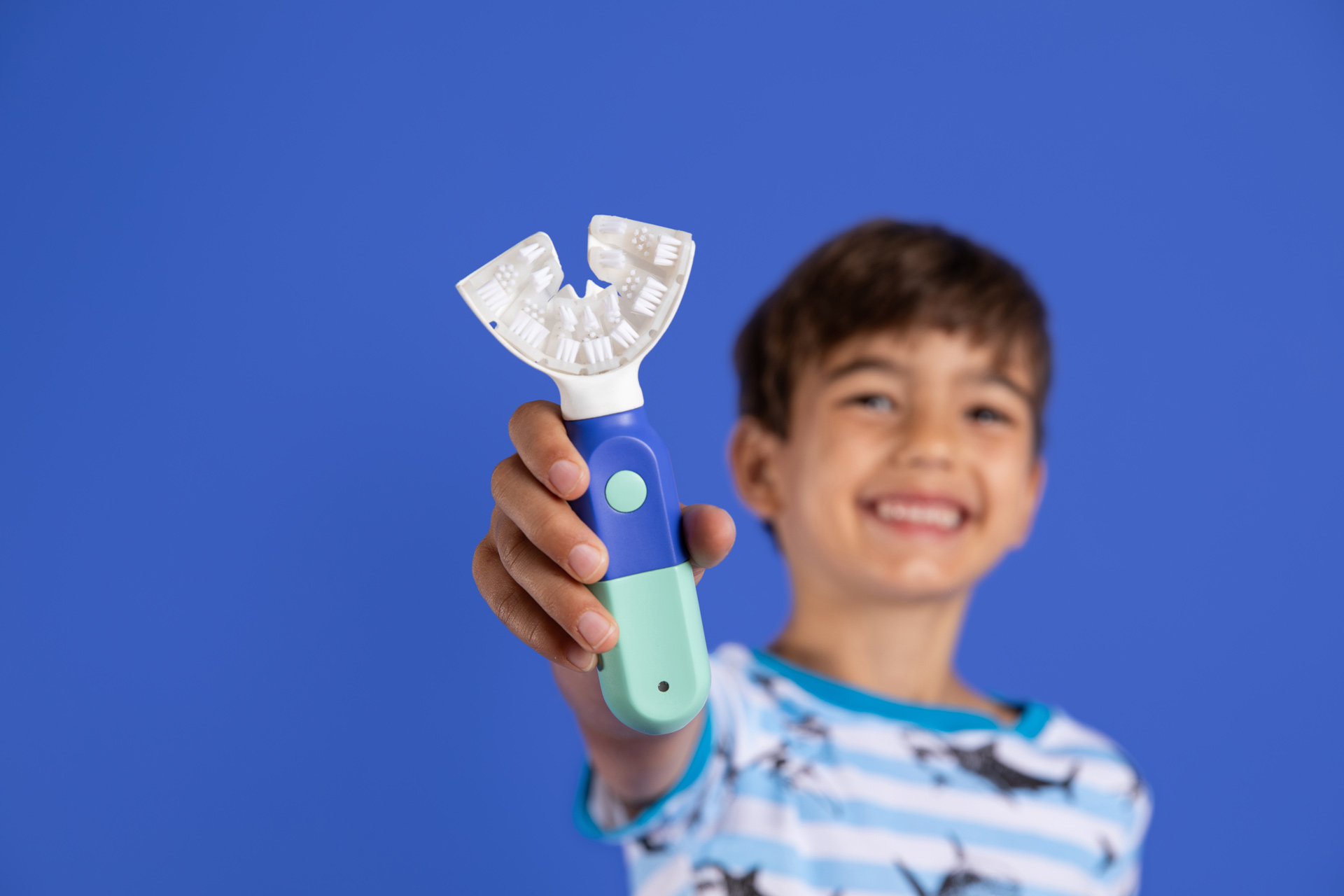 SymplBrush, the all-teeth cleaning device Ted references — its folding bristle tray began as a hand-assembled prototype before the client committed to factory tooling. tomorrow-lab.com/projects/symplbrush Image: SymplBrush
Your portfolio has a lot of mobility projects. Is that a developed expertise, or does one project just lead to the next?
Expertise in certain areas is always needed, but the way our brains work and our company is set up, we enjoy becoming experts in new areas. What we view our real expertise as is the prototyping and invention process itself — and that has nothing to do with a particular domain. I don’t need to be an expert in dentistry, cycling, or aeronautics to prescribe a really good prototyping plan for an idea in any of those fields. It comes down to familiarity with the different domains and expertise needed — what the nascent concerns are, what’s hard in that domain, what the common pitfalls are in electrical, mechanical, or software engineering, and when those things start to interact enough to guide the whole process.
That’s why dentists come to us to develop toothbrushes. That’s why toy designers at Hasbro come to us to invent a new way of launching their darts or balls. That’s why someone building an agricultural sensor stake comes to us — they’re experts in farming, but they’re not experts in hardware prototyping.
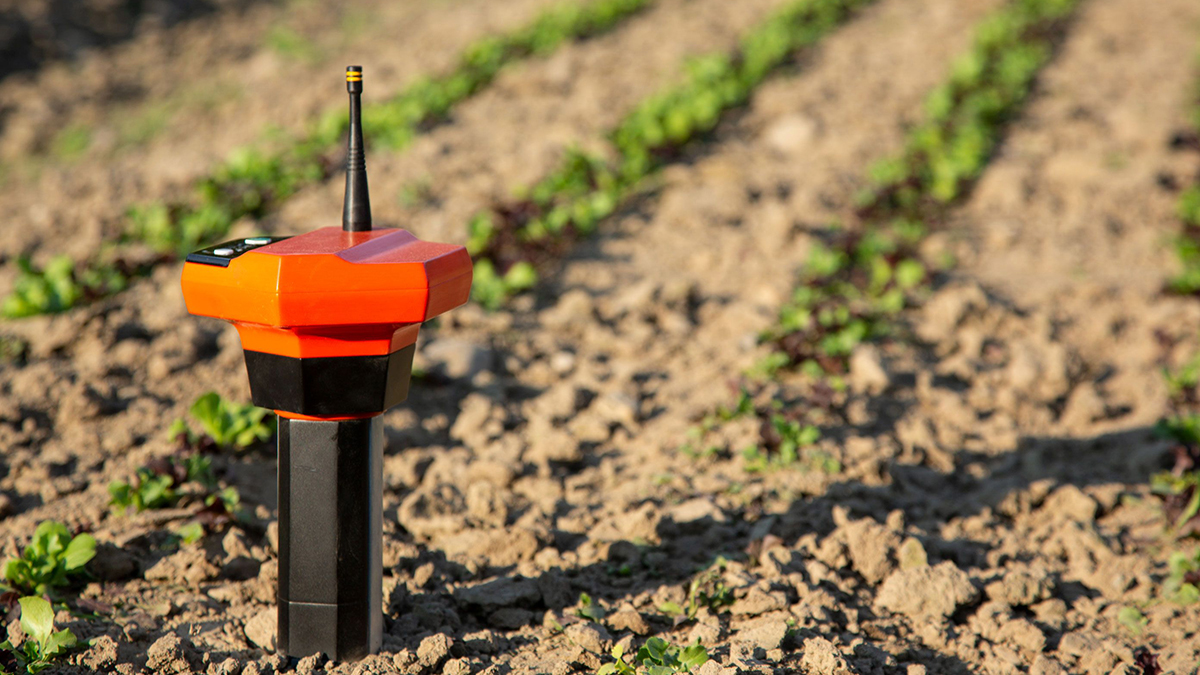 Teralytic, the agricultural soil-sensing stake Ted references as an example of a client with deep domain expertise but little hardware prototyping background. tomorrow-lab.com/projects/teralytic Image: Teralytic
So how do you build that domain expertise when someone comes to you with something you’ve never done before?
Our whole business is based on a twelve-phase process, which breaks into three main areas: idea to prototype, prototype to product, and product to pilot production. It starts with phase one, discovery. We go through the business plan, the features someone wants, and a state-of-the-art review of analogous and competing products. We try to come out of that with a feature strategy — a prioritized list of what this thing does.
I’d emphasize the priority part. Making sure you know the first priority — the one thing this product does that others don’t — and getting laser focus on that is critical. It’s possible to launch a product that’s a lot of small, nice improvements, but it’s very difficult to market that, because your marketing premise becomes one long paragraph instead of “it’s the world’s first ___” or “it does this one thing.” And more importantly, it’s hard to develop, because without a priority list, designers and engineers are continually reconciling what’s more important and where to spend their time if one thing isn’t working.
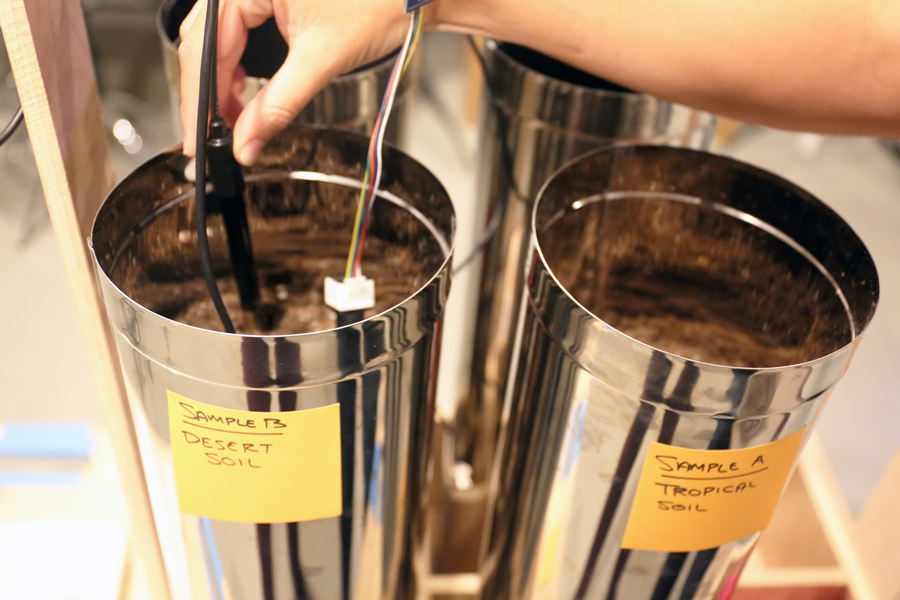 _Step 2 — Sensor Validation & Electrical Engineering, from the Teralytic case study: a test rig comparing prototype sensors against benchmark instruments before committing to a design. tomorrow-lab.com/projects/teralytic Image: Tomorrow Lab LLC _
What makes a prototype succeed as a produced product, not just work on the bench?
Lots of testing. User testing is key, and we think about it in four main tiers.
Tier 0 is a cosmetic model — a “looks like” model. That’s the easiest — you can show a picture, a rendering, or a 3D print. A picture’s worth a thousand words. You haven’t made it work yet, so you haven’t overinvested, but you’ve put in enough that someone can react. Is it the right size, the right color? You can describe what it does in bullet points and get a reaction. We’ve created prototypes where someone immediately said, “That’s way too big, I can’t imagine where I’d fit that in my home” — they rejected it on looks alone, before they’d even heard what it does.
After the “looks like,” we build the “works like,” and that’s almost the opposite — we don’t pay attention to how it looks at all. We break it down into individual subsystems so we can target them separately — the battery charging system separate from the sensor system, separate from the motor. That lets us untangle a hairy product and identify the one or two features that are actually tricky, and invest our engineering time there, rather than, say, breadboarding Bluetooth or Wi-Fi, which is an understood risk.
So a “risk up front” approach?
Yes, and it’s surprising how often entrepreneurs are their own worst enemy there — the feature they think is the differentiator, they’ll covet and protect so much that I’ve met entrepreneurs two years into their business who haven’t even tested the thing they think is the whole point. I know why — if they face it and it doesn’t work, their ego is crushed. But that’s going to happen eventually anyway, and you have to work through it to get the real insight, instead of just running on adrenaline.
Once that’s resolved, everything else gets easier. DFM — sure, maybe no one’s designed your particular product before, but there are so many best practices: draft angles, thermal design, not attenuating a wireless signal. Any experienced product designer has enough DFM knowledge to get a design far enough into reality, but bringing it across the finish line is where working with a factory is critical. We’re good at invention and reconciling design needs into a manufacturable product, and we’re good at recognizing who the real experts are. If we’re designing a light bulb that plays music, we focus on the music part, and find a factory that already makes light bulbs to bring the expertise on heat sinks and thermal paste. We have a specific checkpoint in our process, near the end of prototype-to-product, where our designs get reviewed by the actual factory. But we also know not to do that on day one — that’s doing things out of order, and it creates tech debt or overinvests in the wrong thing too early.
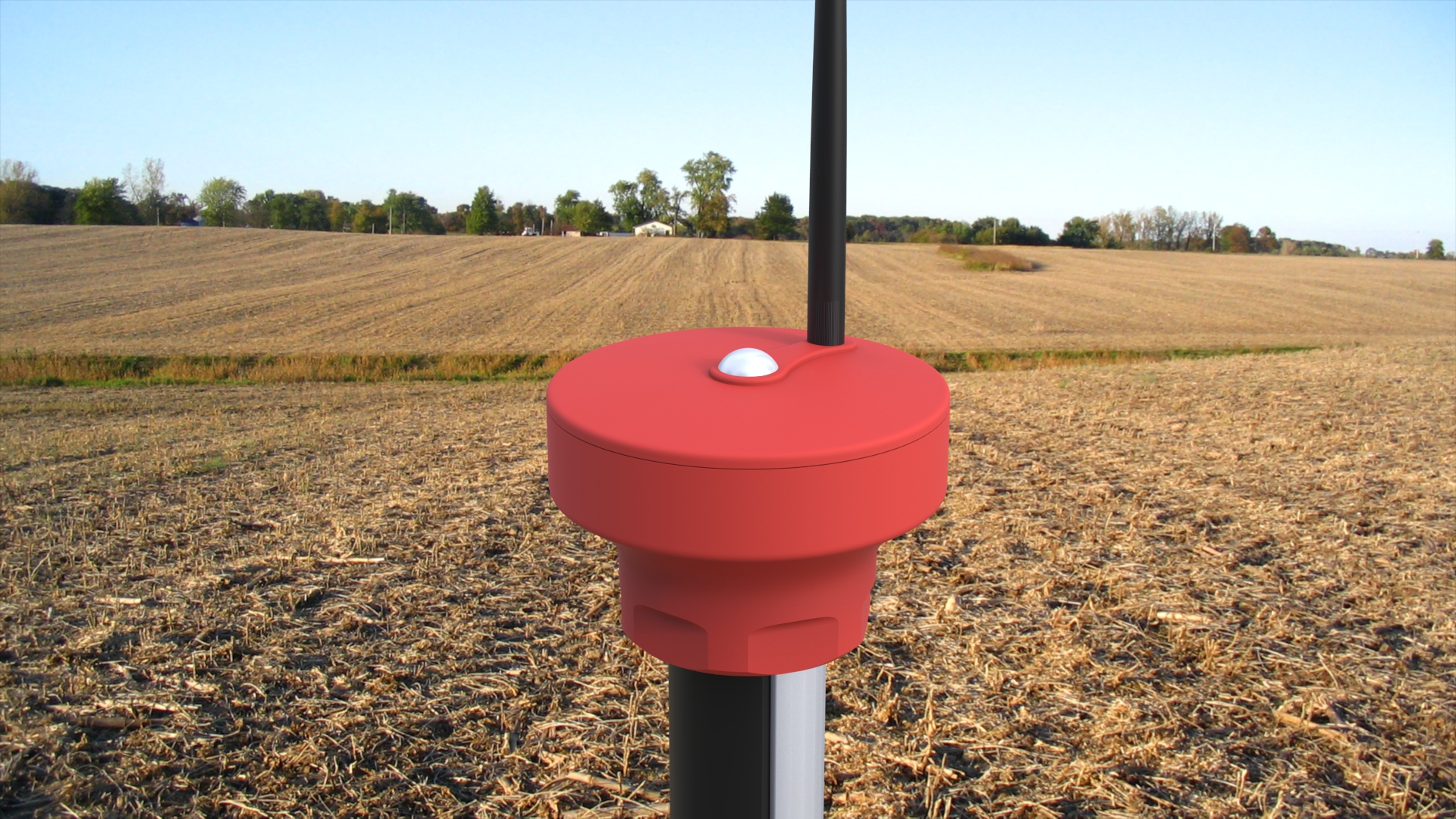 _Step 3 — Product Architecture & Industrial Design, from the Teralytic case study: splitting the design into a “head” and “shaft” once the electronics were validated. tomorrow-lab.com/projects/teralytic Image: Tomorrow Lab LLC _
When a breadboard prototype works electrically, but the entrepreneur has never designed a PCB — what’s that first conversation like?
One of the biggest things there is what we’d call a chip-down design. In the electrical component world, you’ve got raw components — raw chips, resistors, LEDs. You could design everything from scratch starting there, but a more intelligent approach starts at the module or subsystem level. Other engineers have already put those raw chips onto more digested boards — maybe it already has the antenna, a few LEDs, a connector, a battery charger. Adafruit is famous for this, so is Seeed Studio — they invest a lot of time creating these modules, like pre-made recipes. The benefit is you don’t waste time on the rudimentary but important work of laying out a raw chip, fabricating the board, debugging trace lengths. They hand you the module with example code, and in five minutes you’re using it. That’s great for us, because we can jump straight to what clients care about — the proof-of-concept demonstration.
But then there’s a reconciliation moment: now you want to manufacture it, which means considering undoing the module design and creating your own custom board — a chip-down design. That’s a tough call, because there are consequences. You take on responsibility for certifications — FCC, CE, UL. You bear the consequences of your own design errors — wrong copper weight, traces too thin, misreading a datasheet, wiring to the wrong pin. There are also minimum order quantities and long lead times — if you want your own board, you might have to order a hundred of them and wait ten weeks, because now the manufacturer has to source the chips themselves, versus a module where someone already stocked them. You have to walk the client through all of those trade-offs one by one.
One example — we did a color sensor project, for a media piece, sorting bottle caps by color using a sensor from Adafruit or Seeed. We were just trying to build one proof of concept, so what mattered was everything besides the sensor itself. We didn’t pursue a chip-down design — the off-the-shelf board was small enough, so we could focus on the application: a motor identifying the cap’s color and turning to put it in the right bin. If that client had wanted to move forward, then we’d have done the chip-down design, which involves mechanical engineers and industrial designers too, especially for something like a wearable where every millimeter counts — moving from snaps and screws to sonic welds or overmolds, and electrical engineers moving from a continually-reprogrammable mindset to a one-and-done factory process, maybe with over-the-air updates for the customer after that.
I won’t go too deep into OTA updates, but it’s worth mentioning — over-the-air updating has become a lot more mature and robust over the years, but even a couple of years ago it was easy to brick a device if you didn’t choose the right bootloader.
A more illustrative example of chip-down is our Hammerhead project — a navigation device for cyclists. The end result is a T-shaped device, but we started with a square PCB that was bigger than needed, so we could probe and make sure everything was working before investing in the scaled-down design. That’s a great example of the process, too — you can show someone the design and ask, “Would you want this?” They can understand it: “Oh, it can tell me directions.” We could refine the UX — is this turning-light animation actually going to tell people to turn — and show it before finalizing anything.
(Note: the color-sensor bottle-cap sorter Ted describes is Season 1, Episode 02 of Tomorrow Lab’s Potentially Genius web series, rather than a standalone project page.)
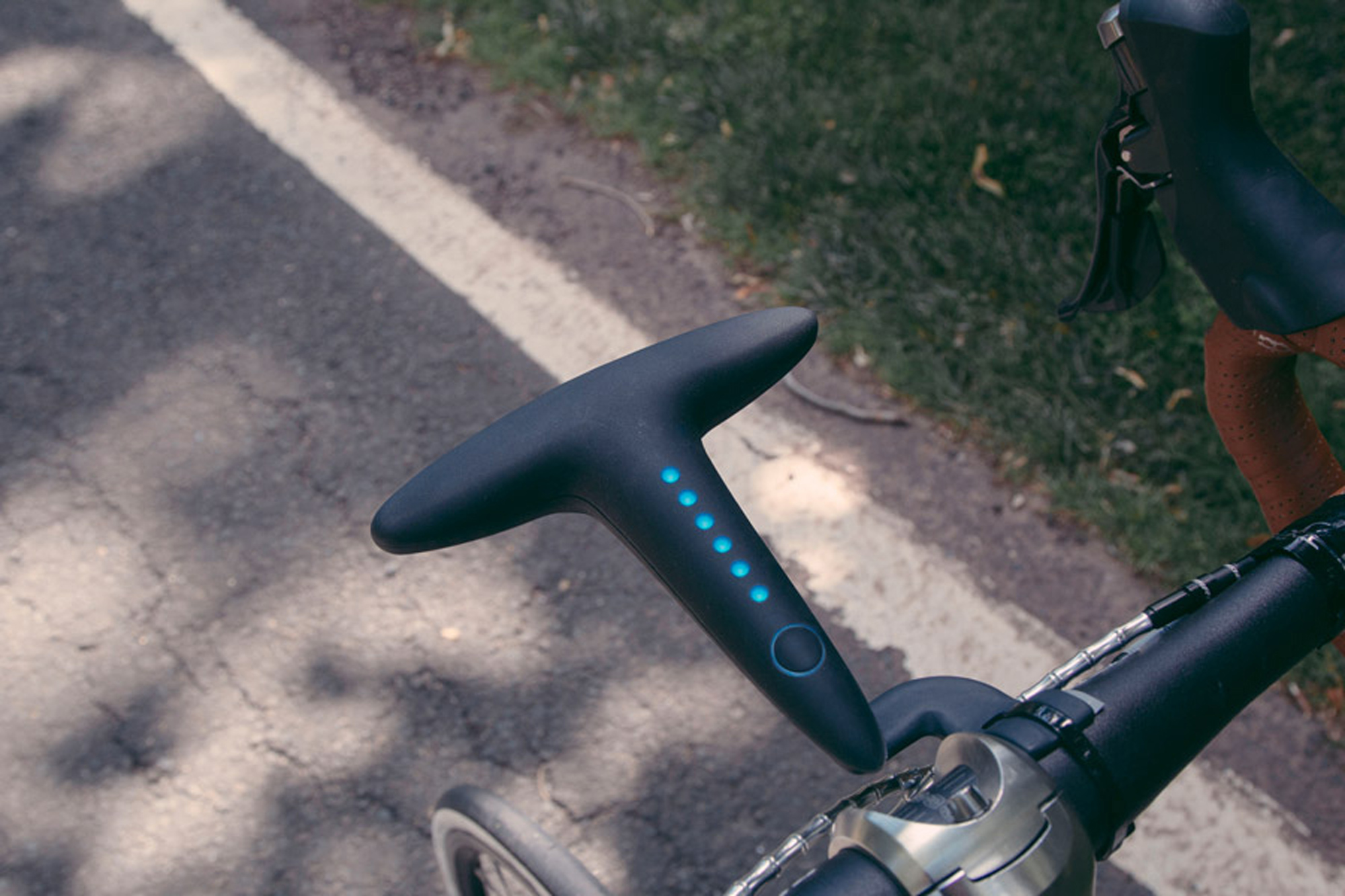 Hammerhead, the hands-free bicycle navigation device — its final T-shaped form came after early testing on an oversized square PCB. tomorrow-lab.com/projects/hammerhead Image: Hammerhead
Do you have a favorite project story?
JUMP Bike. It has a long story — I met the founder, Ryan Rzepecki, around 2009 or 2010. He was working for the New York City DOT at the time, on what would become Citi Bike, before it existed — tasked with introducing the idea of bike sharing to community groups in New York. I’d lived in Copenhagen the year before for school and was familiar with their bike sharing. He had a patent for a dockless design, and I told him I was an engineer and designer who knew a lot about this and could help. That was the beginning of us working together, and eventually I started Tomorrow Lab with my co-founder, and we inherited the product design for years, including the transition to electric, when it was rebranded JUMP — the checkout interface, the app, the interface of the bike itself. It was acquired by Uber in 2018 and scaled globally from there.
I remember going to Rome in 2021 and riding one of those bikes with a friend through the city, thinking: this is a product I helped start ten years ago, and it’s all across the world now. That was a real moment.
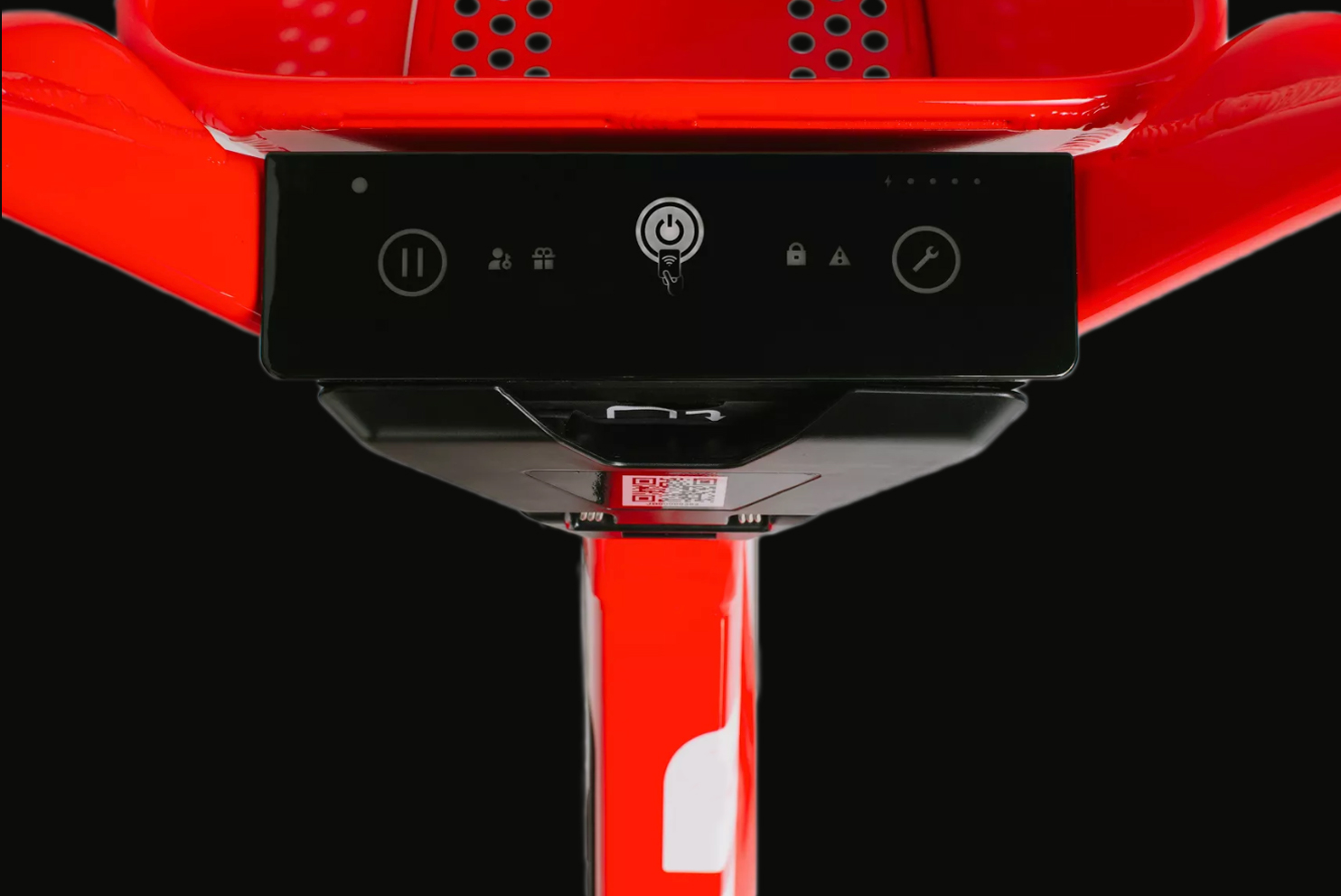 The JUMP Bikecheckout interface Tomorrow Lab redesigned, replacing a keypad and U-lock with a simple RFID tap. JUMP was acquired by Uber in 2018. tomorrow-lab.com/projects/jump Image: JUMP Bikes
Tell me about the tangible design course you teach.
We taught Smart Objects at SVA — School of Visual Arts — in their Products of Design program, in 2015 and 2016. We inherited it from Carla Diana, who invented the course. We came back to teach it again in 2025. It’s a seven-week course — three-hour classes, some hosted here at Tomorrow Lab. There were some grumbles, but overwhelmingly students liked coming here — we have equipment, materials, inspirational things to look at, and we set up tours of other companies in this building, which has over 75 small physical-craft businesses. Students really liked that.
The premise of the course is: what is a smart object? We talk about that on day one, because cramming electronics into something doesn’t necessarily make it smart. By week two, we go through examples of technology products that actually make us dumber — through bad design choices, or by adding to anxiety, making us more dependent rather than smarter. We want students to avoid that. Some of the best projects that come out of the course don’t have any electronics at all — students thinking beyond putting a battery and a sensor in something, into form, materials, or how something folds or transforms.
They work in groups of three or four and pursue their own idea. One of our favorite readings is Anthony Dunne and Fiona Raby’s Speculative Everything — they get into the poetic, speculative side of design. One of their projects designs an electronic object for a human to communicate with an alien, built around an invented “heart language,” so the device is shaped like a heart-sensing stick. It doesn’t actually work, but there’s real design thinking and real questions being resolved in the fiction they build around it. Those projects aren’t for everybody — they’re harder to put in a portfolio, because it’s like showing someone a spoon in a world of knives. But I love that space, because it lets a designer reframe the problem, and when they do it well enough that they’ve uncovered a whole new approach, that’s a big unlock.
I try to make student projects falsifiable — meaning there’s a defined way to know if you’ve succeeded or failed, even if we don’t all agree on the definition. If you say something is more beautiful, fine, but you need to show it to people and test that claim. Usability testing is a big part of that — at the end of the semester we bring people in to use the projects, and students have to sit and watch, and really find out what needs to change. It’s not humiliating, but it removes this force field designers have, where everything works when we touch it, and then we ship it to a client and they find the one thing we didn’t anticipate. Entrepreneurs and design students both tend to avoid testing the thing they’re most scared about — and that always comes back to bite them at the final crit, when it’s too late.
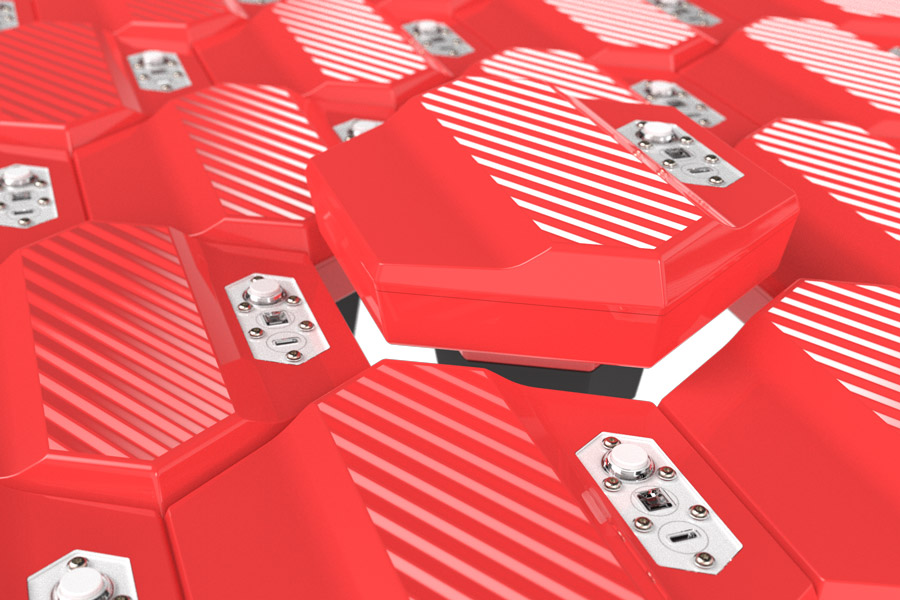 Step 4 — Product Refinement and Pilot Production, from the Teralytic case study: assembly guides and durability testing ahead of a pilot manufacturing run. Not related to the SVA course, but the last step in the same process discussed above. tomorrow-lab.com/projects/teralytic Image: Tomorrow Lab LLC
What’s your take on tangible interfaces more broadly — what’s working, what isn’t?
For me, tangible design goes back to my master’s thesis in 2009 — that was one of the first years Arduino was coming around, and I was using those new tools, along with the ability to connect electronics to the internet, to prototype physical ways of conveying digital information. I wasn’t the only one doing that — I was building on research like Hiroshi Ishii’s at MIT.
I’m still excited about these devices, but I haven’t seen as much commercial uptake as I would have anticipated. You see e-ink displays, the Ambient Orb, things like that, but they’re just not as widespread as I thought they’d be. I do think there’s still a lot of resistance, especially in student projects, to the sheer amount of screen time we have — so I think there’s a big opportunity in screenless devices.
In the commercial realm, the answer has mostly just been screen size — the phone, the tablet, the watch. Apple’s answer to screen time is basically a smaller screen that does fewer things. But I still think there’s more room. There’s a light sculpture on the wall here, made by an intern years ago, that used light to indicate approaching subways. Nest put real thinking into how you turn the dial, and into making the iconography feel less “tech.” There’s a clock from Areaware, designed by Jonas Damon, that deconstructs seven-segment LEDs into individual pieces as an aesthetic gesture. There’s a Teenage Engineering Bluetooth speaker with responsive lighting elements that react to your voice. I appreciate all those subtle things in products, and I think there’s more to do.
Perhaps tangible design is more of a subtle integration. Surgery, for instance, has tangible design in haptic motors in the fantastically precise tele-operated microsurgery machines.
These haptic, tangible features are genuinely hard to do well. The successes I’ve seen are either where the whole product is built around it, or it’s a subtle execution — like that Teenage Engineering example.
I think it comes down to pain points. The tangibility aspect is basically like trying to convince someone who drives to take a bicycle instead. A tangible interface is still an interface — a way of conveying information to a human, just through a different sense. When I look at vehicles — a car, a bicycle, a skateboard, roller skates — those are all different ways of moving your body, and people get really emotional and personal about that choice. You could design an amazing bicycle and tell someone who loves driving, “please buy this,” and they don’t care about the features, because it’s an emotional choice about how they move through the world.
That’s a similar uphill battle with tangible interfaces — people are happy with their screens. You can tell them all day that screen time is bad for their eyes, that it’s raising their stress, that blue light is messing with their sleep — they still like their screens, because they’re emotionally attached to them. So it’s a hard problem, because you’re not solving a problem for someone unless they actually care about it in that way. Maybe that’s a book for designers — how would you explain to someone who only sees the value in cars all the ways they’d benefit from riding a bike sometimes: fresh air, lower carbon footprint, being able to be spontaneous, easier parking, lower insurance, lower risk from car crashes. You have to find their actual entry point into caring. It’s not really about the tangible interface itself — it’s about solving a specific problem, and if a tangible interface is the right answer to that problem, great.
As designers, we get that, because we test products to investigate the theory behind them, not just to test for its own sake. It’d be interesting to see real numbers on how many Apple Vision Pro headsets are actually being used day to day — I don’t see people using them, at least outside of professional settings. What was the insight Apple thought was going to get everyone using it, and where did that go wrong? Sometimes there’s technology push — I’ve got a sensor that does something, and that can help — but ideally you want customer pull: someone saying, “I want this problem solved.” There’s a lot of “does it work or not” flash-in-the-pan technology out there.
Apple used to be able to make bold moves with real insight behind them — eliminating the floppy disk, no Ethernet port, committing to Wi-Fi, because they knew where the industry was heading. I feel like today, nobody really knows what tomorrow holds, so everyone’s guessing, and the market is a lot more fragmented — people who love screens, people who hate them, Luddites and not. Frankly, that fragmentation is exciting, because it should lead to more appetite for inventive ideas. But you have to wait and see, the way we’re still watching how electric cars play out — real change, some good, some bad, but it’s changed what people want.
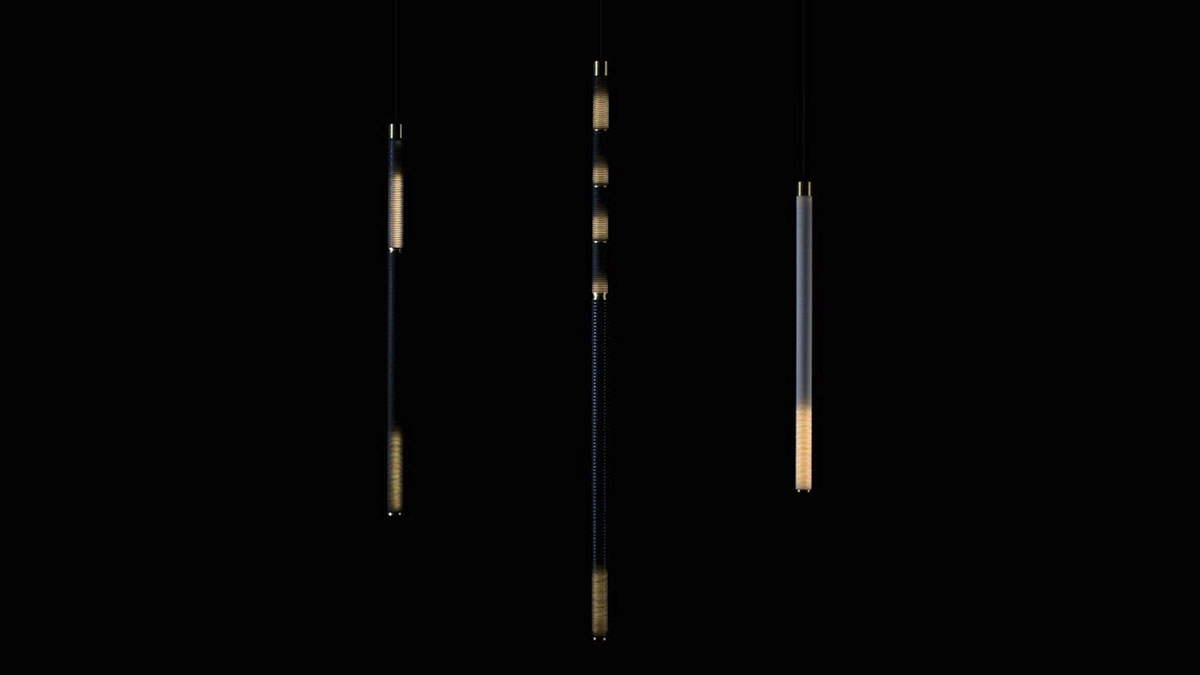 Lightweights, a Tomorrow Lab collaboration that tells time through “dripping light” rather than a screen — the kind of ambient, tangible display Ted contrasts with the Apple Vision Pro. tomorrow-lab.com/projects/lightweights Image: Rux Studios