A Tangible Talk with Carla Diana
Interview conducted November 3, 2026
“I think there’s a tremendous opportunity for designers to invent new languages of interaction for physical objects, rather than simply importing the conventions of screen-based interfaces into the physical world.”
For my forthcoming book, Designing the Tangible Interface, Carla Diana was kind enough to answer my questions about her book My Robot Gets Me, where friendly social cues cross into manipulation, how to prototype behavior and not just form, and whether a second wave of connected products is forming.

Carla Diana is a designer, author, and educator whose work explores how intelligence takes physical form through robots, objects, and interactive systems. She is Associate Professor and Director of Product Design at Lawrence Technological University, and Design Advisor and former Head of Design at Diligent Robotics, maker of the Moxi hospital robot. From 2018 to 2025 she led the Interaction (4D) Design program at Cranbrook Academy of Art. Earlier in her career she worked at Smart Design and frog. She is the author of My Robot Gets Me: How Social Design Can Make New Products More Human (HBR Press, 2021) and LEO the Maker Prince (2014), co-hosted the Robopsych Podcast, and co-invented the ClikBrik metronome. She holds an MFA from Cranbrook and a BE from The Cooper Union.
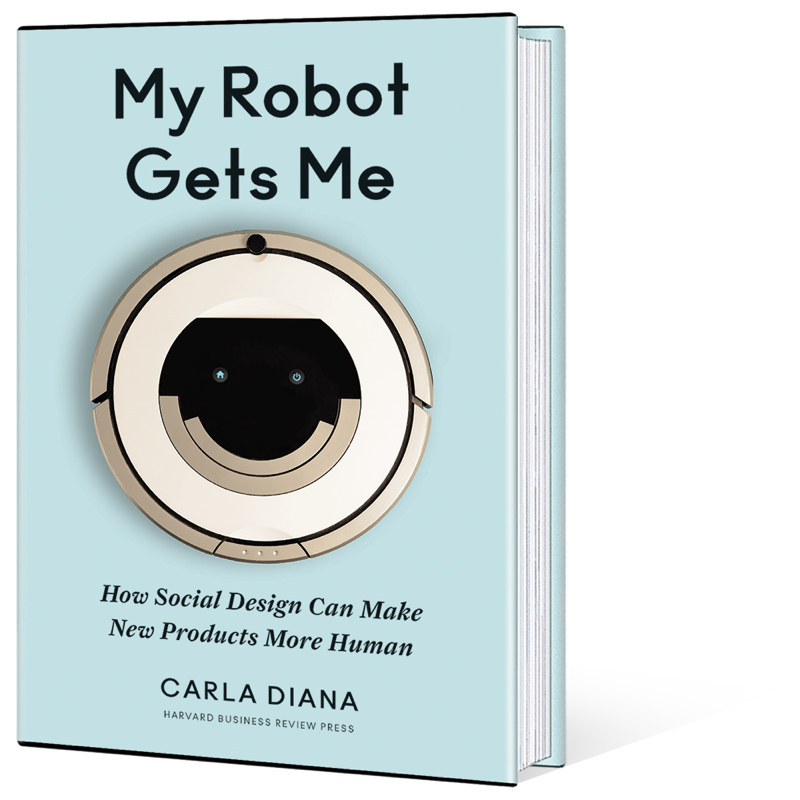 My Robot Gets Me (Harvard Business Review Press, 2021). Image: Carla Diana
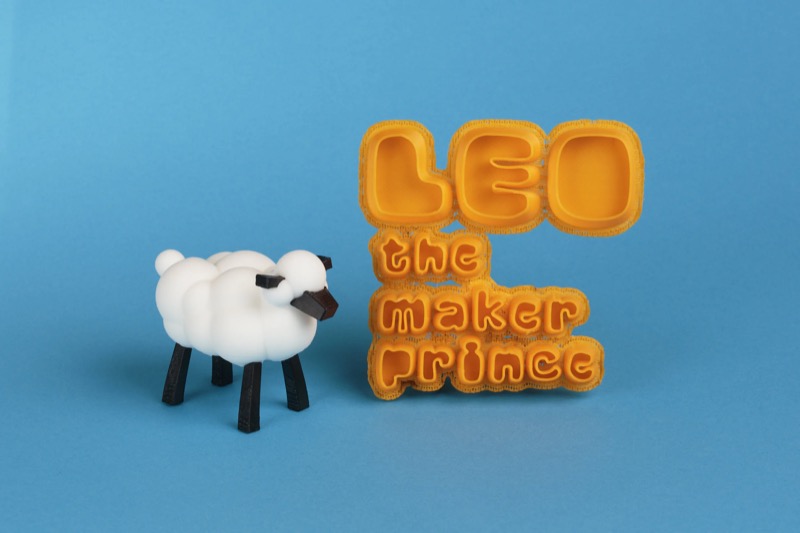 LEO the Maker Prince (Maker Media, 2014), Carla’s book about 3D printing, with downloadable object files. Image: Carla Diana
The book and social design
What pushed you to write My Robot Gets Me when you did? Was there a moment when you realized designers lacked a shared language for how robots behave and relate to people?
The biggest impetus to create the material that eventually became My Robot Gets Me came way before the book, when I was working as an industrial/interaction designer at Smart Design (and previously at frog design). I realized that designing products with behavior enabled by embedded electronics required new methods. These products couldn’t be described with traditional static sketches and ID drawings because the dynamic characteristics (like light behaviors, sound outputs, and motor-enabled movements) needed to be articulated in different ways, and this articulation was core to crafting the very nature of the product.
At that time, around 2008–10 or so, I started documenting new methods for this pioneering territory in design. Later, I had the opportunity to work on things that were not just behavior-enabled interactive objects, but full-on robots! Not only did I apply the new methods I’d been developing, but I was also learning so much from the researchers I was working with in the field of social robotics, namely Dr. Andrea Thomaz and her team at the Socially Intelligent Machines Lab at Georgia Tech.
Making the connection between these very advanced robots and what would surely trickle down into everyday things like vacuum cleaners and other household appliances made me feel that having a shared body of knowledge for robotic objects was more important than ever. And since I’d been involved with academia and realized that there were no formal courses around this kind of design, I developed course material to train the next generation of designers, introducing new courses in what I was calling “Smart Object” Design.
The course material included so many case studies, interviews with experts, and design notes that it gave me the desire to compile it all in a book. I owe a lot to Wendy Ju as well, since many of our conversations about being pioneers in this space led to our shared enthusiasm for this new area in design.
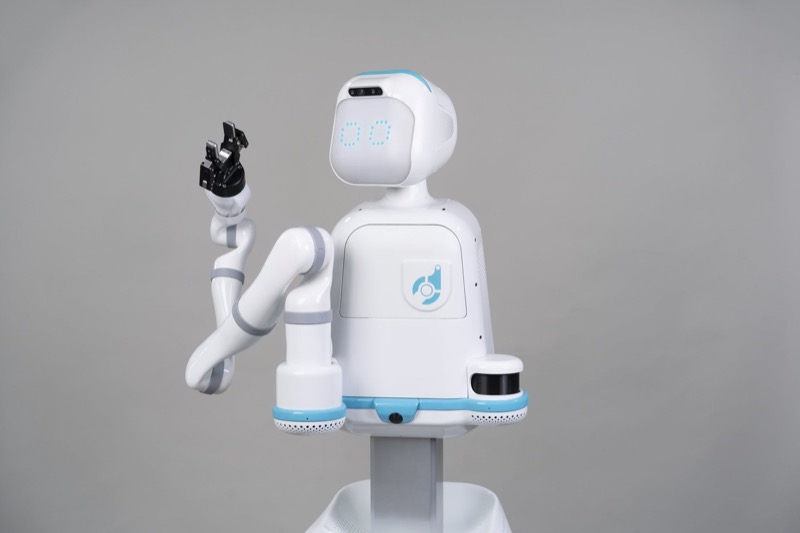 Moxi, the hospital robot from Diligent Robotics, co-founded by Andrea Thomaz and Vivian Chu, in its first version. Carla was Head of Design from the company’s start in 2017, working on its brand, product semantics, and behavior guidelines. Image: Diligent Robotics
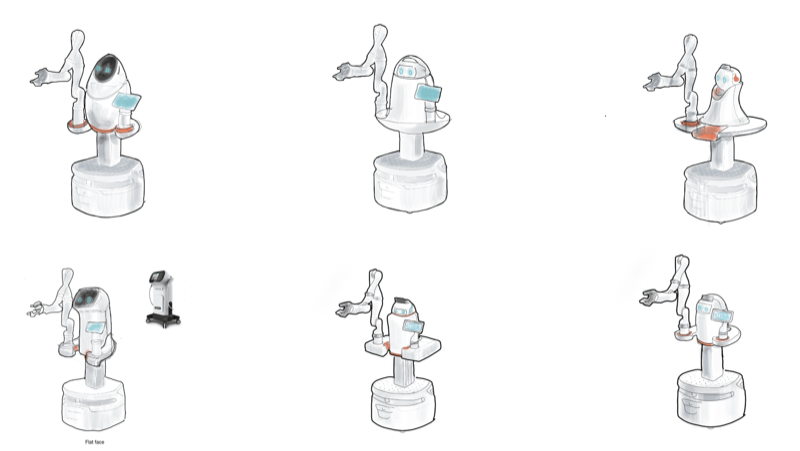 Early Moxi concept sketches. Image: Carla Diana
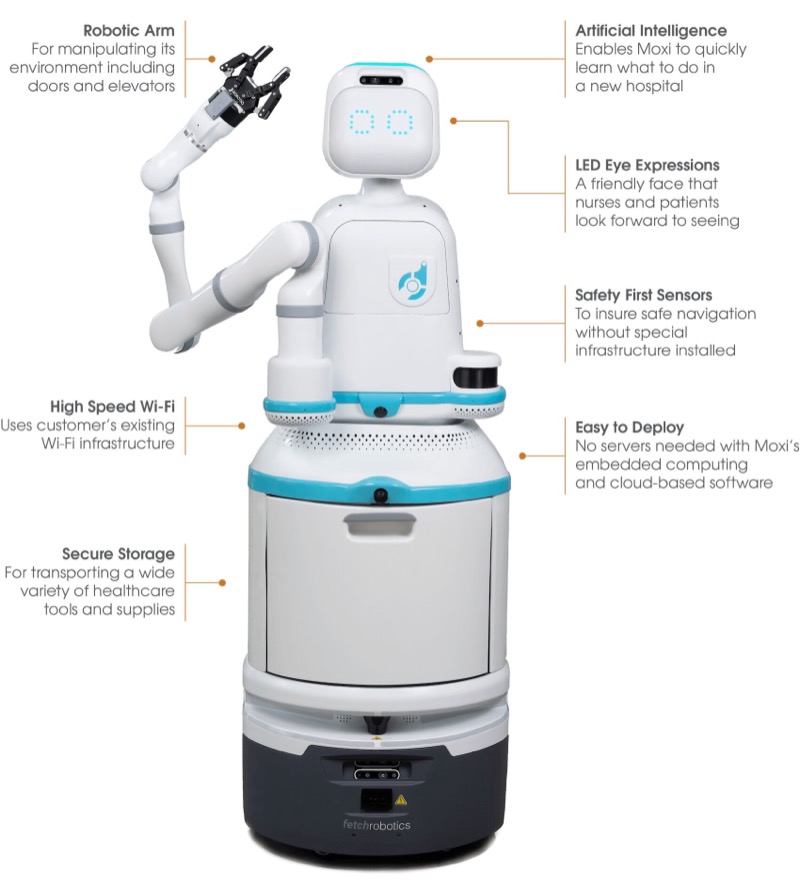 A later Moxi on its wheeled base. The LED eyes are labeled “a friendly face that nurses and patients look forward to seeing.” Image: Diligent Robotics
Can you walk through a project where social cues like motion, sound, or light changed whether people trusted or accepted a product?
I’ve worked on a lot of products like medical equipment or kitchen appliances, where advances in the ability to provide sound and light cues dramatically improved the kind of feedback a product was able to provide and thus made it easier to understand, which in turn can make it more trusted and accepted.
In my career as a product designer, I watched feedback mechanisms go from a single on-off light bulb or simple beep to the kind of full-spectrum, dimmable LED displays and melodious sounds that became possible through the affordability and accessibility of embedded microcontrollers.
Specifically, the Neato Botvac design at Smart Design was a project where the product was in a relatively new category (floor-cleaning robots), but we were able to learn from some of the company’s predecessors (e.g., the Roomba Robotic Floorvac). Our research team talked with Roomba owners, and there were also several research projects at Georgia Tech at the time studying people’s emotional responses.
The Roomba was not designed as a particularly “social” robot, but when we learned about the ways that people personified the products, customized them, filmed them being “introduced to the family,” and forgave their shortcomings (“poor thing, he’s stuck!”), we knew it was an opportunity to amplify the social cues to provide more trust and acceptance.
In addition, Neato was an early pioneer in bringing LiDAR-based navigation to consumer robot vacuums, so unlike the early Roomba’s “blind bumping” behavior, this robot could be a lot more deliberate in using light, sound, and movement to communicate its state and align with people’s mental models of what it was doing.
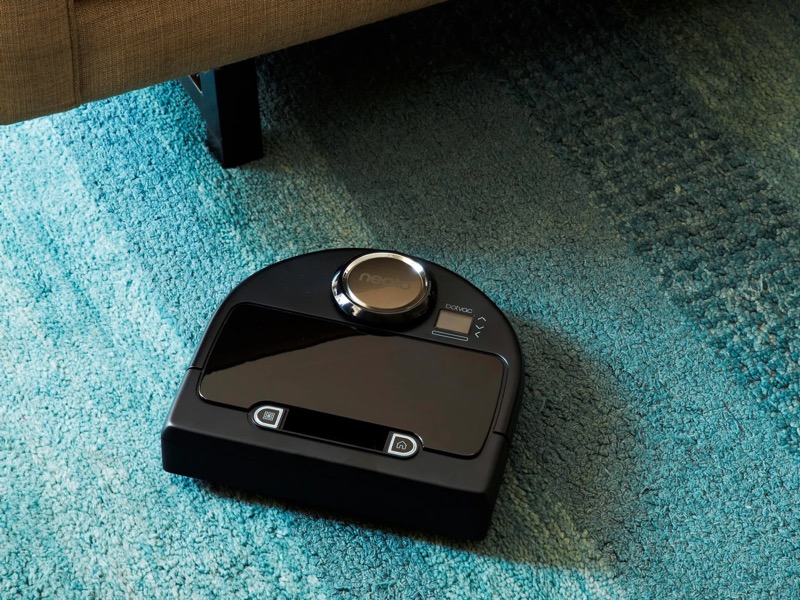 The Neato Botvac Connected. The raised disc on top houses the LiDAR sensor. Image via WIRED
Humanizing and its risks
Googly eyes work on almost anything, including a machine built to do harm. Where do you draw the line between friendly social cues and disarming people’s judgment? Have you ever chosen to make a product less human or less friendly than it could have been?
I’ve pushed back often on humanizing designs, preferring to make things more like appliances than entities, but this has been more from an aesthetic point of view, simplifying and abstracting the form semantics, than from a concern about disarming people’s judgment.
For certain medical appliances, like a biopsy machine I worked on at Smart Design, we needed the interface to be absolutely clear and efficient. In that context, adding personality could possibly become a distraction.
But for the most part, I think almost everything benefits from being “friendlier” if that means making it easier to understand feedback and use the product. The distinction for me is between making something approachable and making it appear to have human qualities or intentions that are mimicking “human-ness” at the expense of clarity.
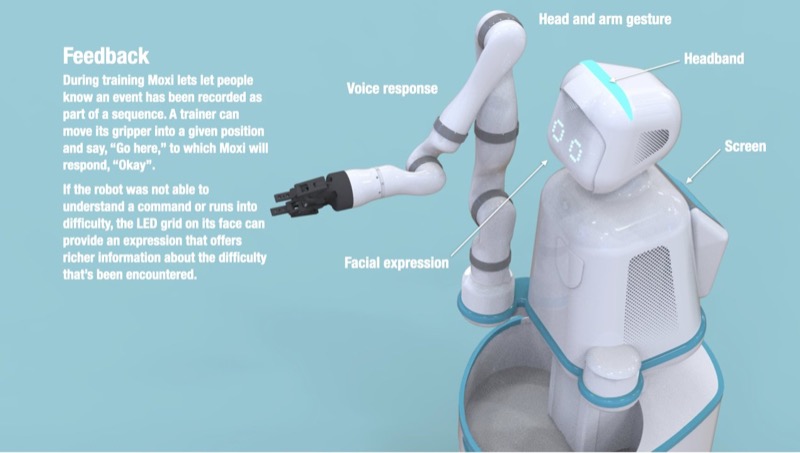 Moxi’s feedback channels. When it can’t understand a command, the LED grid on its face shows an expression that explains the difficulty. Image: Carla Diana
People see faces in outlets and car grilles, so very little triggers a social response. How do you test whether a design reads as a face or a personality when you didn’t intend one? Which minimal cues (two dots, a tilt, a pause) carry more weight than designers expect?
I honestly don’t think I’ve done anything quite this specific. These are great questions for some really targeted research. The robots I’ve worked on have been projects in collaboration with robotics researchers and had some specific constraints specified before beginning. In my studio, I work on pushing abstraction to the very minimum, but so far it’s been my own intuition and the reactions of friends and family to prototype iterations.
 Characters reduced to a slot and two bumps from MobilityTown by Carla Diana and Motomichi Nakamura.
If the pull toward anthropomorphism is this automatic, who is responsible when a product exploits it: the designer, the company, or the user? Would you support a design ethic or labeling norm for products that simulate emotion or relationship?
I talk to my students quite explicitly about ethics and the power of persuasion that a robotic product can have when a person gets drawn into the suspension of disbelief. In other words, when we start to develop an emotional connection with an object because of robotic behaviors, it’s important to acknowledge that this can persuade people to behave in ways they might not otherwise have.
I think we are just starting to see the repercussions of this with some of the dialogue happening around social media and its addictive nature. Physical objects will also be part of this sphere.
First and foremost, it’s important to be especially sensitive to these risks when designing for vulnerable populations such as children and people with cognitive disabilities. Beyond that, designers should understand the end goal for the relationship. Is the product building a connection with the person in order to make the interaction more efficient? Or is it to convince them to spend money beyond their means, consume more health-reducing substances, or engage in other behaviors that are ultimately detrimental to the person using it?
If the latter is the case, the designer should be aware and make their own ethical decision as to whether or not they want to work on that particular project. Ultimately, the company is responsible, and certainly designers take on roles with organizations and are not always privy to that entity’s end goals.
I’d certainly support a design ethic that’s built by a consortium of robot design experts and manufacturers. I’m less certain about labeling. I can’t picture what the label would say just yet, as it would be so different and nuanced depending on the context.
Teaching prototyping
How do you get students to prototype behavior (timing, gesture, response) and not only form? What are your cheapest, fastest ways to test whether a robot feels right?
I encourage non-tech prototyping methods at the early stages of a project. I coach students to bring in anything physical, like foam core, cardboard, tape, pipe cleaners, etc., and mock up a prototype as early as possible. If there is a light behavior, they can use tape to indicate where the lights are and include things like stickers to show changes in state.
Above all, I encourage a lot of bodystorming, or acting out the use case in real time and space. Video prototyping is another great way to prototype a dynamic behavior quickly. Students can set up a simple scenario that they act out and then use a tool like After Effects to add the lights or sounds that might change.
Alternatively, they can use stop motion to create the illusion of an animated behavior (like the way motors might move something through varying degrees of freedom). This can also be useful for user testing because you can show the video to others and get feedback on the movement before investing time and effort into coding.
But the prototyping tools are becoming so much easier to use that it’s starting to be possible to prototype behavior with actual electronics faster than ever before. I’ve just started using block coding with MakeCode online using the Adafruit Circuit Playground boards that were in the lab at Lawrence Tech.
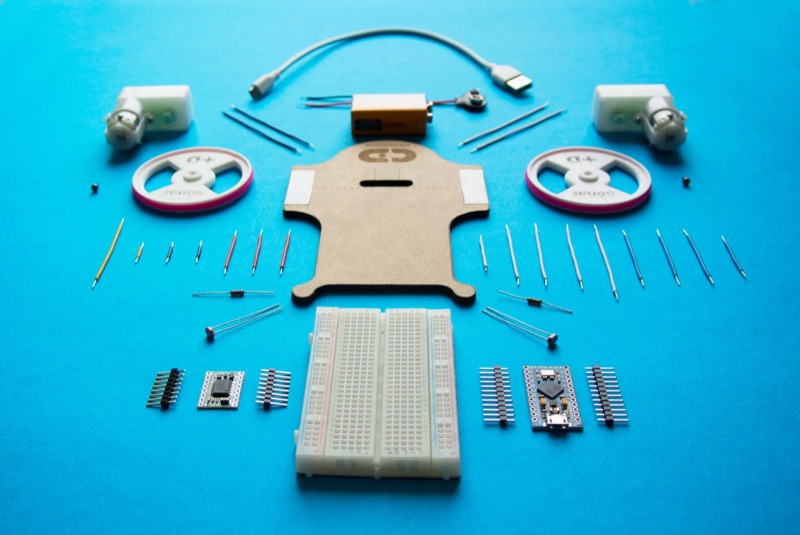 The parts of XAVIbot, a robot behavior kit created for a workshop at the Sónar+D Conference. Image: Carla Diana
Does knowing what’s possible make designers more inventive or more conservative? When do you want students to ignore constraints, and when do you want them inside them? Has a limitation, like a cheap sensor or small display, ever improved a project?
Having just come from the Sketching in Hardware Summit, I think that knowing what’s possible makes people incredibly inventive! But the sheer number of possibilities can also lead to the paradox of choice and result in a bit of paralysis. Constraints are very important for creativity, and establishing a core set of variables is key at the start of any project.
I find that working with limited capabilities, whether it’s a small display, a few LEDs, or a single motor, can force you to be much more thoughtful about what you want to communicate. You start to develop a vocabulary with the materials and behaviors you actually have, rather than continually adding more features. Then as iterations reveal more insights about needs, more sophisticated components can be considered.
IoT then and now
Around 2012 there was a surge of connected products: Nest, Kickstarter hardware, Little Printer. Why do you think it happened then, and did it recede or get absorbed until it stopped being called IoT? Which products were solutions looking for problems, and which held up?
OMG. I love my Nest thermostat. It is one of the best-designed objects I’ve ever interacted with.
I think it happened then because of a confluence of factors: affordable sensors, improvements in portable rechargeable batteries, and easily programmable microcontrollers trickling down from large-scale manufacturing ecosystems, combined with the ramping up of near-ubiquitous Wi-Fi in people’s homes and workplaces. And you mention Kickstarter, so the introduction of crowdfunding as a new business model was very exciting for entrepreneurs.
I think it receded because it really depended on reliable protocols and the ability for the manufacturer to provide frequent and stable updates. That’s a lot of strain on a startup, and many smaller companies couldn’t support the effort or compete with the larger companies entering the space.
Additionally, the burden of cords and batteries makes a lot of products a drag to use over a long period of time. When you realize that you have to plug your earmuffs in every night before you use them, the novelty wears off quickly.
I think there were many, many products that were solutions looking for problems, but I’m just as surprised by the ones that held up. Things like internet-connected toothbrushes seemed superfluous, but it seems that people find it useful to track hygiene habits. A lot of the “quantified self” movement, where people were trying to track every aspect of their lives, seemed extreme, but it paved the way for lots of research leading to real, useful products.
Some people fetishize data more than others (I’m happy to track my steps, but I don’t need to know elevation or speed, for example), and a lot of it depends very much on context. An IoT drink bottle might sound like overkill for an average consumer, but when Smart Design worked with Gatorade on a personalized hydration system for the Brazilian national soccer team, it was addressing a very specific need. Context can make all the difference.
Is a second wave forming now? Some point to Gen Z’s interest in older objects and fatigue with touchscreens, chips like the ESP32 where Wi-Fi is assumed, and AI that translates datasheets and helps debug. What’s different this time, and which failures from 2012 are likely to repeat?
I think what’s different this time is that the tools for creating interactive objects have become so much more accessible. Between inexpensive microcontrollers, increasingly sophisticated development environments, and AI-assisted coding, there’s an opportunity for a much wider range of people to experiment with physical interaction.
It’s interesting that I see people interested in Tamagotchi-like simple toys. I think that’s encouraging, but I also worry about creating more landfill from novelty items that have short shelf lives.
The best of all worlds would be to see simpler things out there that can be reconfigured as people’s needs change. I know that Google’s Project Ara configurable smartphone never took off, but there was a glimpse of something more sustainable than the way we consume devices in there.
Does AI-assisted hardware work widen who can make things, or does it let people skip the understanding that comes from struggling with a datasheet? What do you tell students about using it?
I’m teaching a Wearable Technology Design course, and I have the students start with an Arduino Uno, learning key coding principles, how to read Arduino sketches, and how to use the Serial output to debug code.
I do think that struggling with the logic behind how a product reads inputs and expresses behaviors is important, but I also allow AI-enabled development during the second half of class, once the core concepts have been established. I encourage the use of AI at that point, but I also insist that students be able to explain the parts of the code that they are using, even if it’s AI-generated.
At the end of the day, I feel strongly that it widens the opportunity for people to make things. After teaching physical computing skills for years, I was amazed at how some students were able to get up and running with a sensor and an Arduino so much more quickly than ever before.
For the right kind of student, it liberates them to grow in leaps and bounds on their own timeline, without having to wait for the learning milestone to come through traditional instruction.
New ventures and looking ahead
As products become more conversational and autonomous, what should designers be learning now? What would you say to a student starting a physical interaction project today?
Designers should be learning about working with AI systems and gaining an understanding of conversational systems. Josh Clark and Veronika Kindred’s book Sentient Design does an amazing job of explaining how to work with the “nuts and bolts” of these systems.
Ultimately, I’d like to see us as designers craft the “conversation” as something expressed through shorthands of abstraction whenever possible, using light, sound, and movement rather than relying entirely on words and screens. But to do that, we need to understand how the underlying conversation works.
I think there’s a tremendous opportunity for designers to invent new languages of interaction for physical objects, rather than simply importing the conventions of screen-based interfaces into the physical world.
Find Carla at carladiana.com, on Instagram at @carladiana and @designed.to.behave, and on LinkedIn. Educators can download her syllabus for Designing Smart Objects.