Contents
Tangible Interfaces Lab
The Tangible Interfaces Lab at Pratt Institute, created by Steve Turbek, explores interaction design beyond the touchscreen. We design for touch, hearing, and the many other senses that people possess.
“Software is eating the world” claimed Marc Andreessen in 2011. Many consumer products, from cameras to “walkmen” to car dashboards are now simply apps on featureless glass screens. This leads to bland product design and customer dissatisfaction. In car design, touch screens have become a safety concern. “Touch Screen controls take four times longer to perform simple tasks”
Tangible Interfaces are an opportunity for designers. When “everything is an app and all apps look the same” physical interaction is an opportunity for industrial designers to create innovative new products.
Blog
Case Study: Car Dashboard Design
The design of in-car interfaces has become increasingly controversial as touchscreens replace traditional physical controls, creating a tension between technological advancement and user safety. Customers and safety researchers have expressed clear preference for physical over touch screen controls.
Class
The studio focuses on designing for tactile and sensory experiences to build interactive user experiences embodied in physical products. The studio is built around iterative prototyping with extensive use of electronic components, 3D modeling/printing. It will introduce basic electronics using the BBC Microbit, a very simple computer board with a rich sensor package and excellent introductory software. No previous experience of UX or electronics is expected.
We explore the theory and practices of the User Experience Design Process in the context of physical object design. User Research and testing are integral to our process. Our designs must not only be beautiful; we must have the open mindset to validate our designs with users to improve them.
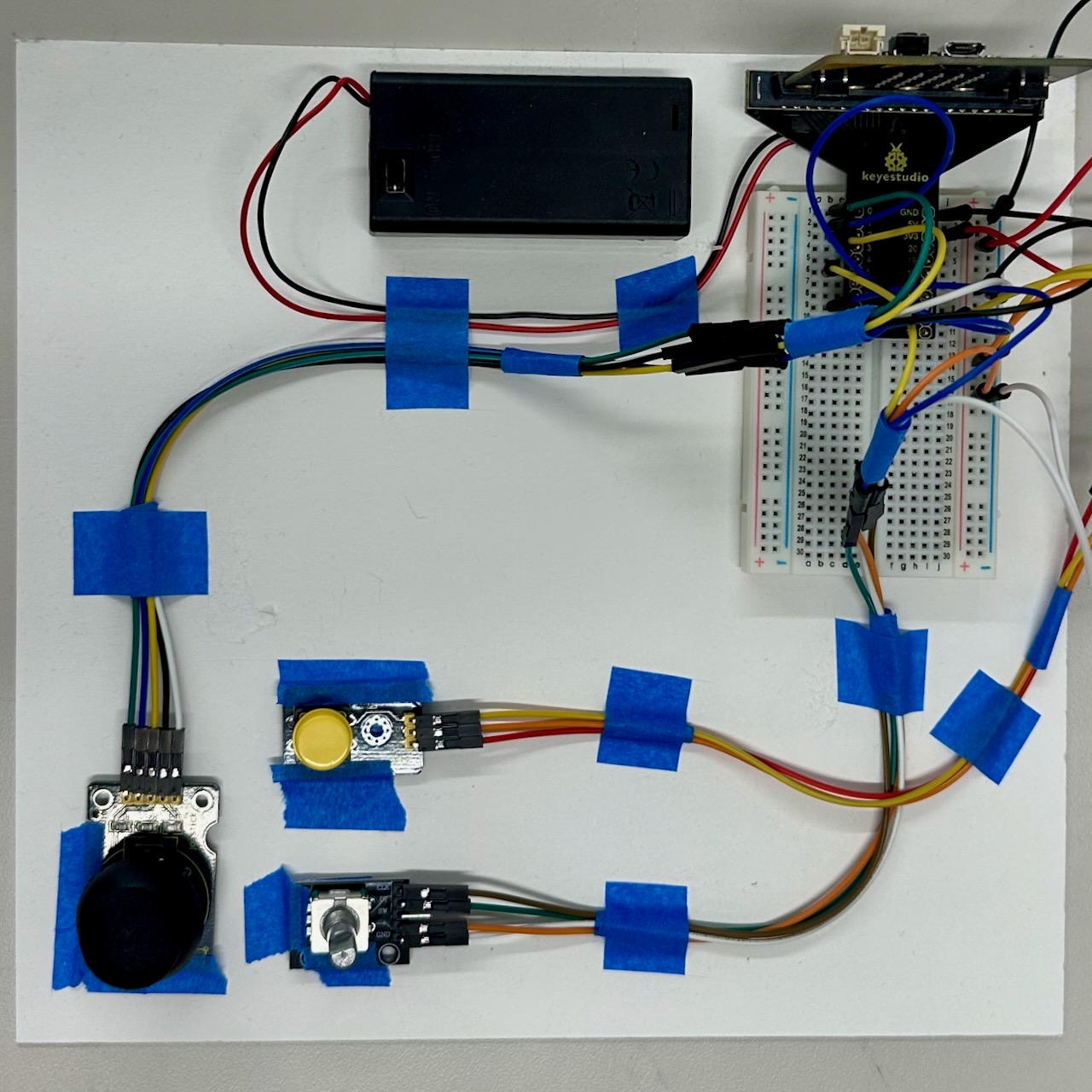
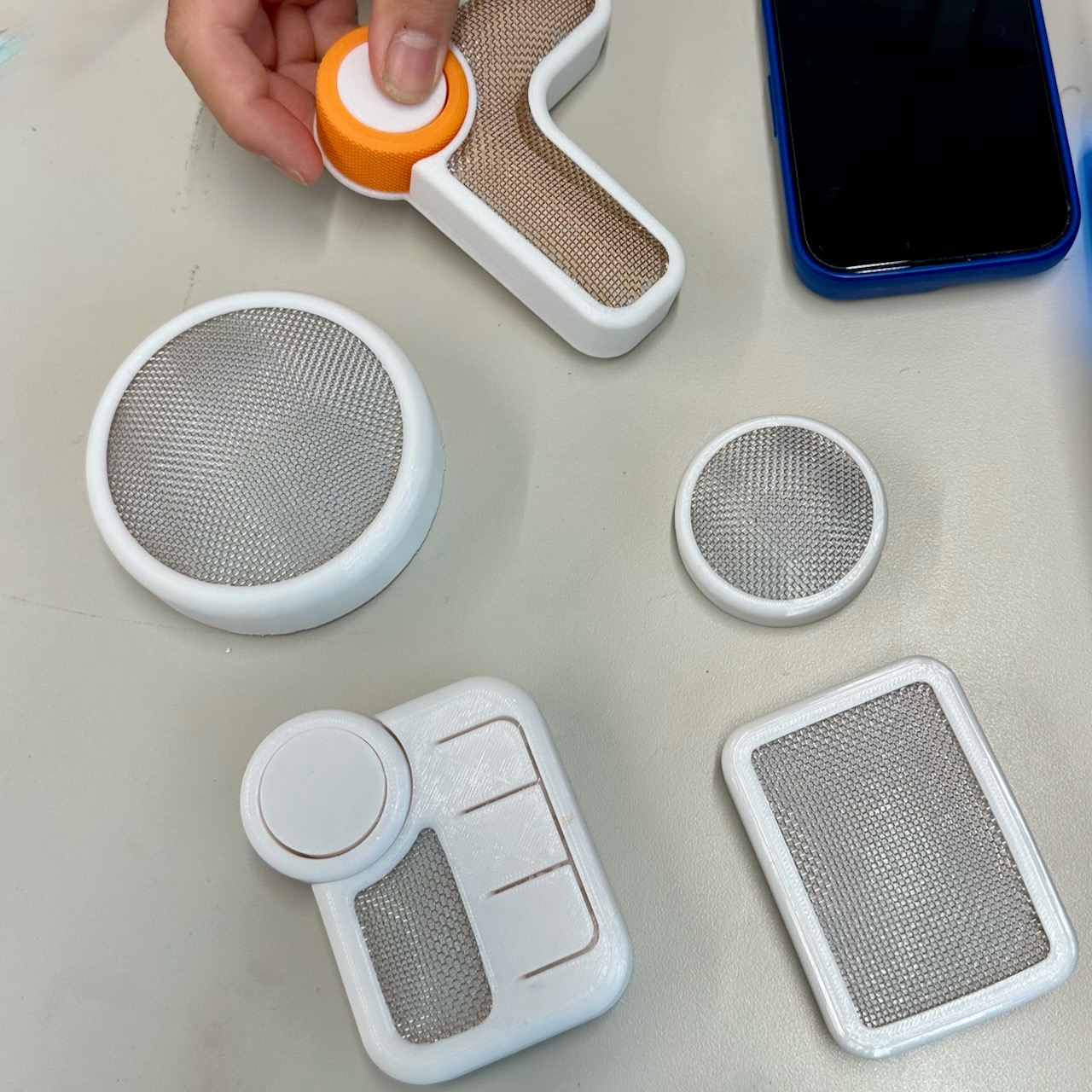
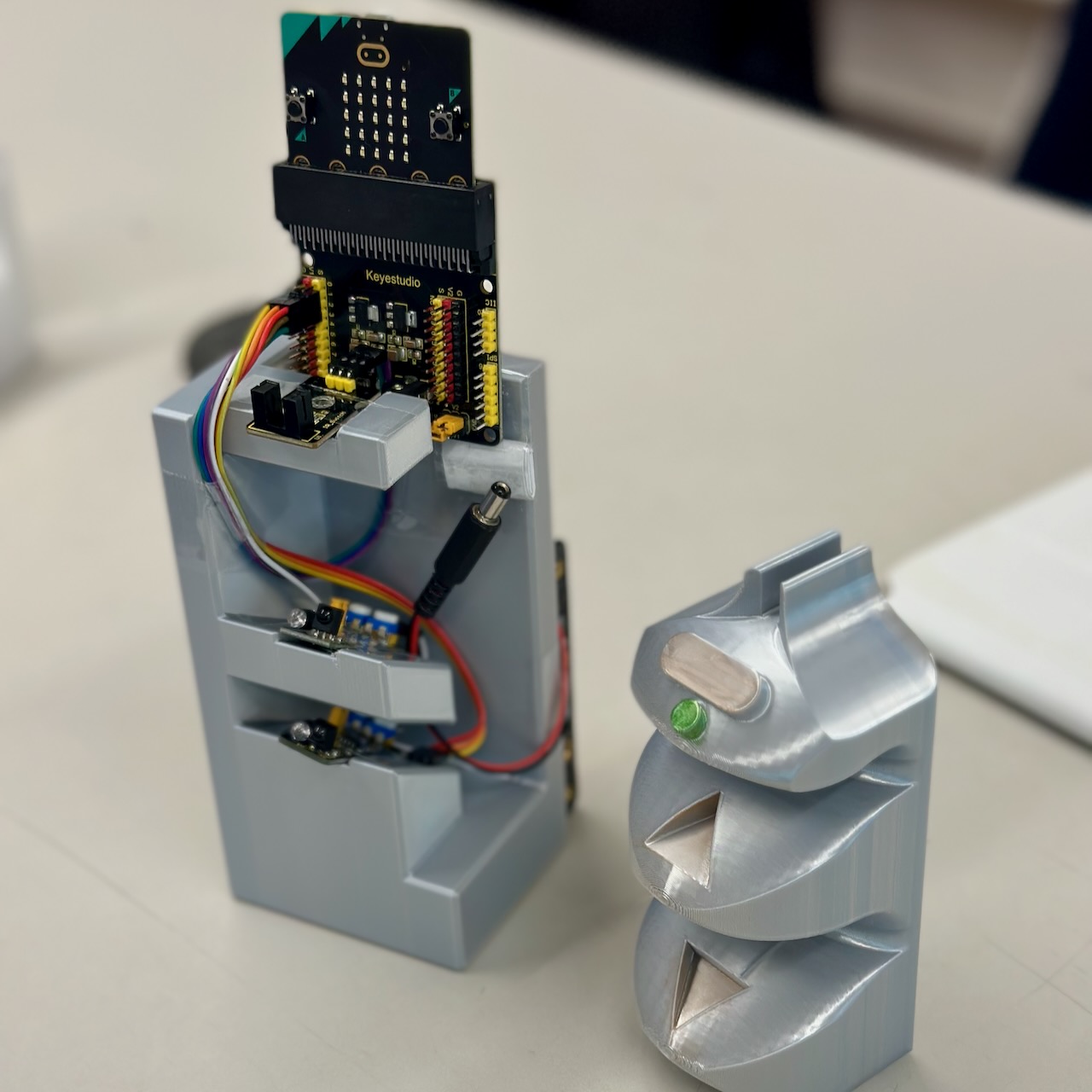
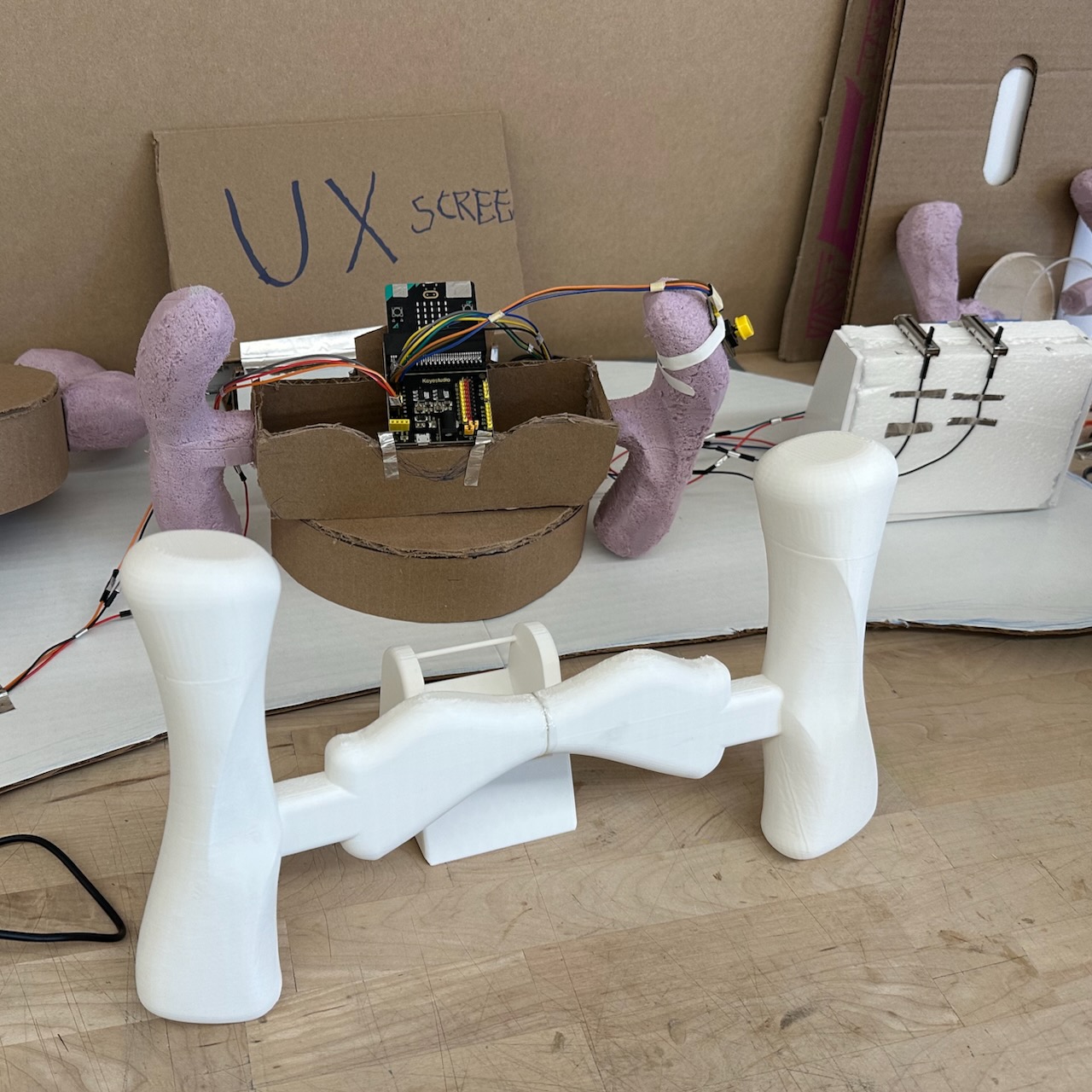
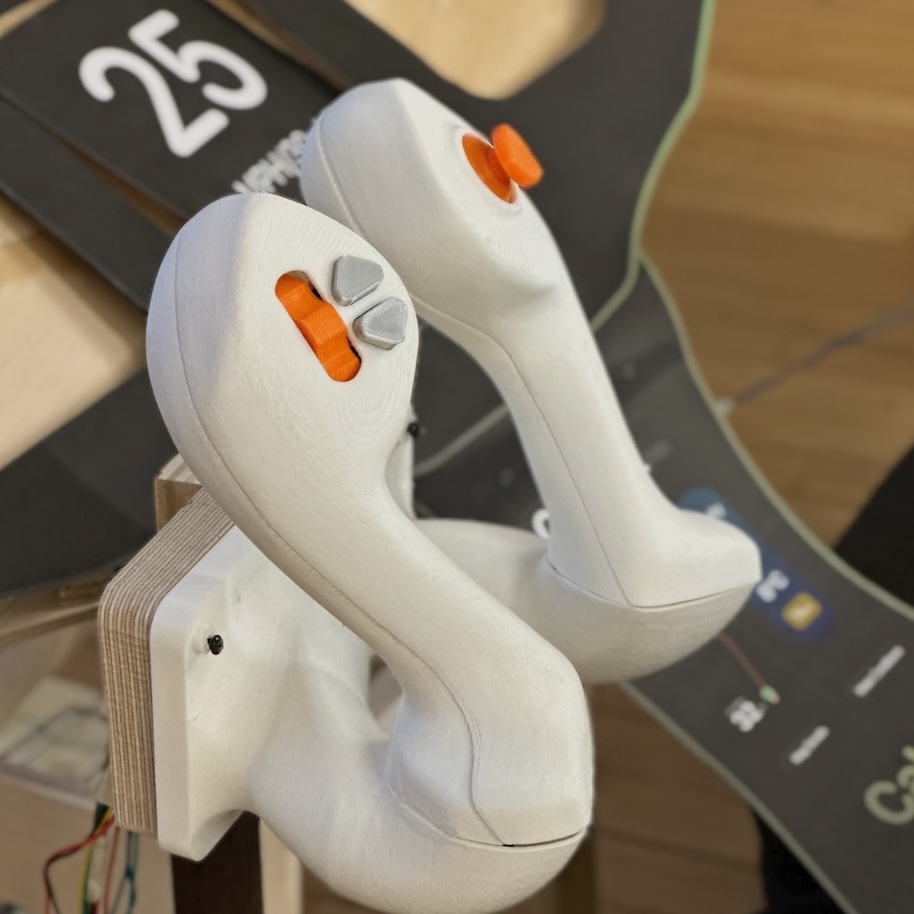
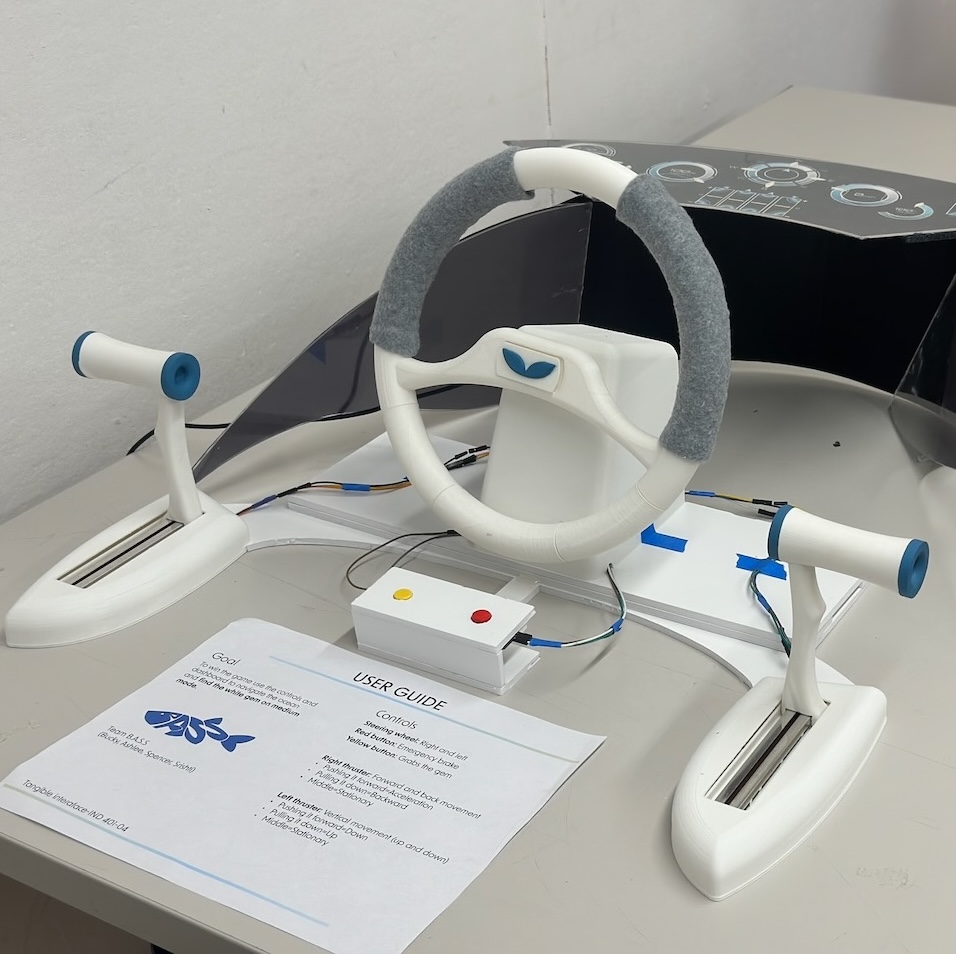
(Photos of student work, used with permission)
Projects
Projects that demonstrate Tangible Interfaces
Hardware
An overview of microcontrollers, sensors, motors, and other components used in the course. Includes diagrams, specs, and tips for choosing the right parts for your project.
Code
Sample code, tutorials, and reusable snippets for working with sensors, actuators, and communication protocols.
References
Books, articles, and online resources on tangible interaction design, physical computing, and related fields.